Symptoms of gangrene
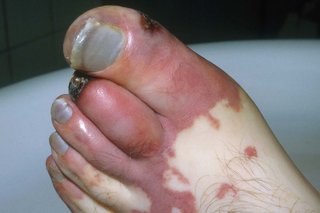
- the affected body part turning a different colour, such as dark red, purple or black - this can be harder to see on brown or black skin
- the skin around the affected body part feeling numb or cold to the touch
- swelling of the skin around the affected body part
- pain that gradually gets worse, or a sudden severe pain
- blisters and sores that leak unpleasant smelling pus or blood
Immediate action required: Call 999 or go to A&E immediately if:
- you think you have gangrene
Do not drive to A&E. Ask someone to drive you or call 999 and ask for an ambulance.
Bring any medicines you take with you.
Tests for gangrene
You may have several different tests for gangrene while you’re in hospital.
These include:
- blood tests
- biopsy (where a small sample of skin or muscle is removed and tested for things like an infection)
- scans, such as an ultrasound, X-rays, a CT scan and MRI scan
- angiography (a type of X-ray used to look at blood vessels)
In very serious cases, some people may need to have surgery to check if gangrene has spread inside their body.
Treatments for gangrene
Treatments for gangrene can include:
- surgery to remove any dead tissue (debridement) or restore blood supply to the affected area (vascular surgery)
- antibiotics to treat any infection
- painkillers to reduce pain
- medicines to improve the blood supply to the affected area
- oxygen therapy (where you breathe in pure oxygen while inside a small chamber) to try to help speed up healing
Sometimes it may be necessary to completely remove the affected body part (amputation) if other treatments have not helped or are unlikely to help.
If any tissue does need to be removed, you may need surgery later on to repair the affected area, often using skin taken from another part of your body (reconstructive surgery).
Causes of gangrene
Gangrene is mainly caused either by the blood supply to part of your body becoming blocked, or by an infection (usually after having a serious injury or wound).
You’re more likely to get gangrene if you:
- have consistently high blood sugar levels due to a condition like diabetes
- have a condition that affects blood supply to parts of your body, such as peripheral arterial disease or atherosclerosis
- have a weakened immune system
- smoke, drink lots of alcohol or inject drugs – these can damage your blood vessels, which can affect the blood supply to parts of your body
Reducing your risk of gangrene
Having a condition that affects your blood supply, like diabetes, can increase your chances of getting gangrene. But there are things you can do to reduce the risk.
Do
-
try to quit smoking if you smoke - help is available from the NHS for people ready to quit
-
eat a healthy diet, exercise regularly and try to lose weight if you’re overweight or obese
-
keep taking any treatments you’ve been given for diabetes, high blood pressure or high cholesterol
-
check your feet every day if you have diabetes – look for things like swelling or changes in skin colour and tell your doctor about any changes
-
attend any diabetes check-ups or screening appointments offered to you