When to get urgent medical help for babies and children under 5
It's not always easy to tell when a baby or child under 5 years old is seriously unwell, but there are certain signs and symptoms to watch for.
Immediate action required: Call 999 or go to A&E if:
A baby or child under 5 years old:
has swollen lips, tongue or throat with difficulty swallowing or talking
is breathing very fast or has difficulty breathing – they may make grunting noises or suck in their tummy when they breathe
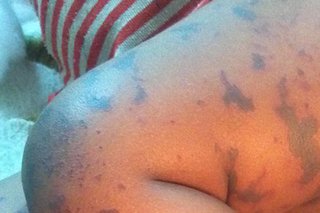
has blue, grey, pale or blotchy (mottled) skin, lips or tongue – on black or brown skin, this may be easier to see on the palms of their hands or soles of their feet
has skin that feels cold or damp (clammy) to touch
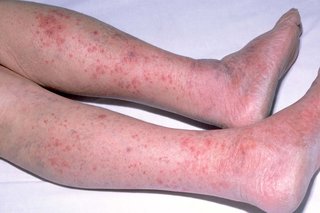
has a rash that does not fade when you press it
has a very high temperature – 38C or higher in babies under 3 months old, or 39C or higher in babies 3 to 6 months old
has a very low temperature – less than 36C, or feels cold to touch or is shivery
has a weak, high-pitched or continuous cry
has fainted, is difficult to wake, or cannot be woken
has not had a pee in the past 12 hours
is having a seizure (fit)
Important:
Trust your instincts
Get immediate medical help if your child is unwell and you think there's something seriously wrong.
Keep checking for new or changing symptoms when they’re unwell, even during the night.
Urgent advice: Call NHS 111 if:
you’re worried about any of your child’s symptoms or do not know what to do
Signs of serious illness in babies and young children
There are some symptoms that can be a sign your baby or young child is seriously unwell with an infection or condition that needs urgent medical help.
They do not need to have every symptom to be seriously unwell.
A high temperature (fever)
A high temperature is 38C or higher. It may not be a sign of serious illness if your child does not have any other symptoms.
However, there are times when a high temperature suggests something may be seriously wrong, such as when a child is:
under 3 months old and has a temperature of 38C or higher
3 to 6 months old and has a temperature of 39C or higher (and they have not had a vaccine in the past 2 days)
3 months to 5 years old and has a temperature of 38C or higher for more than 5 days
Skin changes can be a sign of serious illness in babies and young children if:
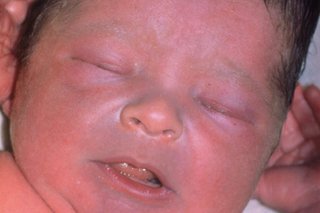
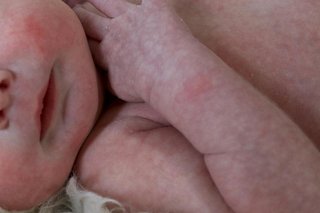
they look paler than usual, or their skin looks blue, grey, yellow or blotchy (mottled) – on black and brown skin this may be easier to see on the palms or their hands, soles of their feet, lips or inside their cheek
their lips, tongue or inside their mouth looks swollen
they have a spotty or patchy red, purple or brown rash that does not fade when you press it
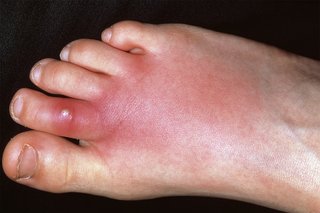
a rash has become worse, or the skin around their rash looks red, swollen or feels hot to touch – redness may be harder to see on brown or black skin
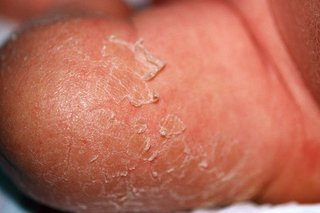
their skin is peeling or blistered, but they do not have chickenpox or sunburn
the soft areas on your baby’s head (fontanelles) look swollen or are bulging
An example of skin appearing blue or grey.
Credit:
ST BARTHOLOMEW'S HOSPITAL, LONDON/SCIENCE PHOTO LIBRARY https://www.sciencephoto.com/media/252318/view
An example of skin that appears blotchy (mottled) with a pattern that looks like lace.