Stevens-Johnson syndrome is a rare but serious skin reaction that's usually caused by taking certain medicines. It needs to be treated immediately in hospital.
Severe Stevens-Johnson syndrome is sometimes called toxic epidermal necrolysis.
Causes of Stevens-Johnson syndrome
Stevens-Johnson syndrome is often caused by your body reacting to certain medicines, particularly some types of:
- epilepsy medicines
- antibiotics
- anti-inflammatory painkillers
Medicines commonly linked to Stevens-Johnson syndrome
- allopurinol
- carbamazepine
- lamotrigine
- nevirapine
- oxicam anti-inflammatories, such as meloxicam and piroxicam
- phenobarbital
- phenytoin
- sulfamethoxazole and other sulfa antibiotics
- sulfasalazine
In children, Stevens-Johnson syndrome can sometimes be caused by infections like a cold or flu, cold sores and glandular fever.
Who is at higher risk
You're more likely to get Stevens-Johnson syndrome if:
- you've had it before after taking a certain medicine – you're more likely to get it again if you take that medicine again or other similar medicines
- you have a weakened immune system – for example, from having a condition like HIV or AIDS, or treatments like chemotherapy
Sometimes your genes can mean you're at higher risk of getting it.
Important
Stevens-Johnson syndrome is rare and the risk of getting it is low, even if you're taking a medicine that is known to cause it.
Symptoms of Stevens-Johnson syndrome
Stevens-Johnson syndrome can start with flu-like symptoms, such as a high temperature, sore throat, cough and joint pain.
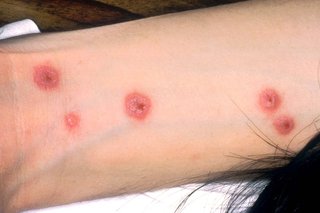
The rash usually starts on the upper body before quickly spreading to the face, arms, legs and other areas of the body, such as the genitals. The rash may be itchy or painful.
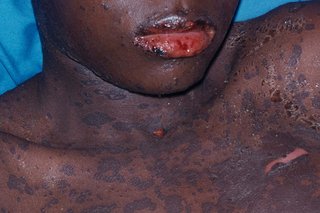
You can also get blisters and sores:
- on your lips and in your mouth and throat – this can make swallowing painful
- in the tube that carries pee out of your body – this can cause pain when peeing
- on your eyes – this can cause eye pain, pain when looking at bright lights and problems with your sight
Other symptoms may include:
- diarrhoea and vomiting
- breathing problems such as wheezing
Immediate action required: Call 999 or go to A&E if you or your child:
- have a rash spreading across the body, or a circular rash that's darker in the middle and lighter around the outside, after having an infection or starting a new medicine
- have a rash and the skin is itchy or painful, red, swollen, blistered or peeling
- are wheezing
- have tightness in the chest or throat
- are having trouble breathing or talking
- have a swollen or sore mouth, face, lips, tongue, throat or eyes
These may be signs of a serious reaction like Stevens-Johnson syndrome and may need immediate treatment in hospital.
Find your nearest A&EDo not drive to A&E. Ask someone to drive you or call 999 and ask for an ambulance.
Bring any medicines you take with you.
Treatments for Stevens-Johnson syndrome
Stevens-Johnson syndrome is treated in hospital, sometimes in an intensive care unit.
Without treatment, the symptoms can become life threatening.
If it's thought Stevens-Johnson syndrome is being caused by a medicine you're taking, the medicine will be stopped.
You'll have treatment to relieve your symptoms, which may include:
- fluids into a vein to prevent dehydration
- specialised wound care, creams and dressings to protect the skin
- strong painkillers to help ease any pain
- medicines to control inflammation and prevent infection
If your symptoms are very severe, you may need to have surgery.
Recovering from Stevens-Johnson syndrome
It may take several weeks or months for you to fully recover from Stevens-Johnson syndrome. It's likely you'll feel very tired for a few weeks after leaving hospital.
Your skin will usually take about 2 or 3 weeks to heal, but it can sometimes take longer if you get a skin infection.
If your symptoms were caused by a reaction to a medicine, you'll need to avoid taking that medicine (and possibly other similar ones) for the rest of your life. Your doctor will be able to discuss this with you.
Complications of Stevens-Johnson syndrome
Stevens-Johnson syndrome can cause serious complications including:
- skin problems like a skin infection, changes in skin colour and scarring
- problems with organs, such as the lungs, liver and kidneys
- eye problems, such as long-term inflammation or sight problems
- problems with the vagina or penis caused by scarring
Page last reviewed: 04 March 2026
Next review due: 04 March 2029