Symptoms of flat head syndrome
The main symptom of flat head syndrome is a flattened head.
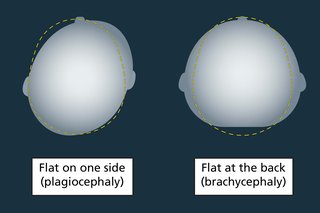
If your baby has flat head syndrome, their head may be:
- flat on 1 side – it may look uneven and their ears may not line up (plagiocephaly)
- flat at the back – it may look wide and the front of their head may bulge outwards (brachycephaly)
Apart from affecting how your baby’s head looks, flat head syndrome does not cause any other symptoms. It does not affect their brain or development.
Non-urgent advice: See a GP if:
- you're concerned about the shape or size of your baby’s head
- your baby’s head is always tilted to one side, or they have difficulty turning their head
How to avoid flat head syndrome or stop it getting worse
There’s no need to worry if your baby has flat head syndrome because it will usually correct itself.
But there are things you can do to prevent them getting a flat head or stop it getting worse.
Do
-
check the shape of your baby’s head for any changes – the earlier flat head syndrome is recognised, the easier it is to stop it getting worse
-
give your baby plenty of time on their tummy while they’re awake during the day – do not leave your child alone while they’re on their tummy
-
change the position of your baby’s toys and mobiles when they’re lying on their back – this will encourage them to turn their head
-
vary the side you feed and carry your baby
Don’t
-
do not change your baby’s sleeping position – they should always sleep on their back to reduce the risk of sudden infant death syndrome (SIDS)
-
do not let your baby spend too much time lying in a pram or sitting in a car seat – take them out as soon as you get to where you’re going
Causes of flat head syndrome
It’s common for young babies to have flat head syndrome.
Their head can become flattened if pressure is placed on their skull. A baby’s skull is soft and can easily change shape.
Things that can cause flat head syndrome include:
- spending a lot of time sleeping with the back or side of their head pressed against the mattress
- tight neck muscles (torticollis) – this makes a baby always rest their head on the same side and they may not be able to turn their head
Some babies are born with a flat head. This may happen if they're born prematurely and is usually nothing to worry about. But rarely it can be a sign of something more serious, such as a condition called craniosynostosis.
Treatment for flat head syndrome
Treatment for flat head syndrome is not usually needed. It often gets better in around 1 to 2 years as your baby’s head grows and they spend less time lying on their back.
The shape of your baby’s head may improve if you do simple things like varying the position of their head while you're carrying or feeding them.
Your baby may be referred for physiotherapy if they have tight neck muscles (torticollis). The physiotherapist will show you some gentle exercises you can do that may help your baby.
Helmets and headbands
Helmets and headbands are not available on the NHS to treat flat head syndrome because there’s not enough evidence to show they work.
Page last reviewed: 16 January 2026
Next review due: 16 January 2029