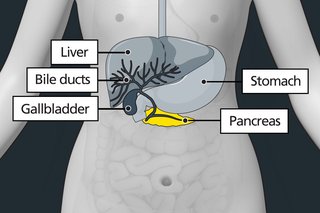
Acute pancreatitis is different to chronic pancreatitis, a long-term condition where the pancreas has become permanently damaged.
Symptoms of acute pancreatitis
The main symptom of acute pancreatitis is pain in your tummy (abdomen). You may also have a high temperature and feel sick or be sick (nausea and vomiting).
Tummy pain may:
- start suddenly and not go away
- be severe, sharp or knife-like
- affect the upper part of your tummy (between your ribs), one side of your tummy or your whole tummy
- spread to your sides and back
- feel worse after you eat, move around or lie down
- feel better when you lean forward or bring your knees to your chest (fetal position)
Acute pancreatitis symptoms can be similar to other conditions such as appendicitis or stomach ulcer. Find out about what else can cause stomach ache.
Urgent advice: Ask for an urgent GP appointment or get help from NHS 111 if:
You get sudden, severe pain in your tummy and:
- it does not go away or keeps coming back
- you have a high temperature, or you feel hot, cold or shivery
You can call 111 or get help from 111 online.
If a GP thinks you have acute pancreatitis they will refer you to hospital for tests straight away.
Immediate action required: Call 999 or go to A&E if:
You get sudden, severe pain in your tummy and:
- the pain is spreading to your back
- you have bloating that does not go away or keeps coming back
- you have a fast heartbeat or difficulty breathing
- the skin around your belly button, waist or upper outer thigh appears blue or bruised – this may be more difficult to see on black or brown skin
Do not drive to A&E. Ask someone to drive you or call 999 and ask for an ambulance.
Bring any medicines you take with you.
Treatment for acute pancreatitis
Acute pancreatitis is usually diagnosed using blood tests and sometimes a CT scan. It's a serious condition that needs treatment in hospital straight away.
You'll be monitored to see how serious your condition is and if it's causing any other problems, such as an infection.
Hospital treatment may include:
- fluids and nutrients – given through a tube into a vein
- painkillers
- antibiotics – if you have an infection
You may also need treatment for what is causing your acute pancreatitis, such as surgery for gallstones or support to stop drinking alcohol.
Most people with acute pancreatitis start to get better within a week and can leave hospital in 5 to 10 days.
If you have severe pancreatitis or it's causing other problems, you may need to stay in hospital for longer.
Problems caused by acute pancreatitis
Most people with acute pancreatitis recover fully. But some people develop serious complications that will need treatment.
Complications of acute pancreatitis include:
- small growths in your pancreas (cysts) – these often go away on their own but may need to be removed if they become infected
- pancreatic necrosis – where some of the tissue in the pancreas dies and you need surgery and antibiotics to prevent a serious condition called sepsis
- chronic pancreatitis – if you keep getting acute pancreatitis it can develop into a serious long-term condition
Acute pancreatitis can be life-threatening. You'll be monitored while you're in hospital, to check for any problems caused by acute pancreatitis.
Causes of acute pancreatitis
The most common causes of acute pancreatitis are:
- gallstones – which can block the opening of the pancreas
- drinking a lot of alcohol
Less common causes include:
- injury to the pancreas, such as during surgery
- medicines, including certain steroids, heart and epilepsy medicines
- other conditions including lupus, mumps, pancreatic cancer or having high levels of calcium in your blood (hypercalcaemia)
How to prevent acute pancreatitis
If you have had acute pancreatitis once, it's possible to get it again.
There are some things you can do to help stop it coming back.
It's a good idea to:
- drink less alcohol, or not drink any alcohol at all
- stop smoking
- eat a healthy, low-fat diet