Symptoms of jaundice in babies
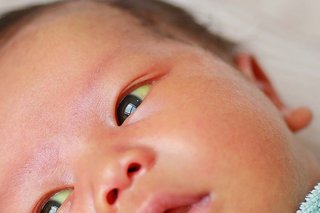
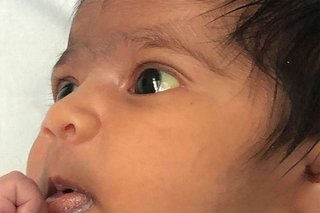
The main symptom of jaundice in babies is their eyes or skin look yellow.
You may notice yellow:
- in the whites of their eyes
- on their skin – this usually starts on the face and head and can spread to the rest of the body
- under their tongue or inside their cheeks
The yellow can be easier to see in bright light or sunlight. Pressing gently on the tip of your baby’s nose or forehead may also make the yellow easier to see.
It can be harder to see yellow on black or brown skin.
For most babies with jaundice, the yellow is most noticeable when they’re around 3 days old. It usually takes around 2 weeks for the jaundice to go.
Urgent advice: Ask for an urgent GP or midwife appointment or call NHS 111 if:
Your baby is over 24 hours old and:
- you think they have jaundice
- they’ve been diagnosed with jaundice and it’s not getting better, or is getting worse
- their pee is dark yellow or brown or their poo is a pale creamy colour (keep a sample of poo to show a midwife or doctor)
Immediate action required: Call 999 or go to A&E if:
Your baby has jaundice and:
- is sleepier than normal or difficult to wake
- is not feeding
- is floppy or stiff, or they have jerking or twitching movements
- has a high temperature of 38C or more, or a low temperature of 36C or less, feels hot or cold to the touch, or is shivering
- has not been producing any wet nappies
- has difficulty breathing (you may notice grunting noises or their stomach sucking in under their ribcage), is breathless or breathing very fast
- is less than 24 hours old
Do not drive to A&E. Ask someone to drive you or call 999 and ask for an ambulance.
Bring any medicines your baby takes with you.
Causes of jaundice in babies
Jaundice in babies is usually caused when a newborn baby’s liver is not able to work properly immediately. This can cause a build-up of a waste product called bilirubin, which is usually removed from the body by the liver.
After a few weeks, the baby’s liver should develop fully and bilirubin levels will return to normal.
Other causes of newborn jaundice include:
- being born with Gilbert’s syndrome, which is a common and usually harmless condition that causes episodes of jaundice
- infections such as rubella (german measles)
- the baby having a different blood type from their mother – haemolytic disease of the fetus and newborn (HDFN)
- problems with how a baby’s liver works
In most babies, jaundice is not a sign of another health condition.
Diagnosing jaundice in babies
Your baby will be regularly checked for signs of jaundice by your care team in the first few days after they’re born.
If they show signs of jaundice, their bilirubin levels will be measured. This can be done using a blood test or by pressing a special light on their skin.
Other tests can be used if the jaundice could be caused by something serious, like an infection or liver problems.
These tests can include:
- blood tests
- pee tests
- ultrasound scans of your baby’s liver
Treatment for jaundice in babies
Most babies with jaundice usually get better without treatment.
Encouraging your baby to feed regularly, around 8 to 12 times a day, can help them get better more quickly. If they’re sleepy, try waking them for feeds.
Ask your midwife or GP for advice if you’re finding it difficult to feed your baby, or you’re not sure they are feeding enough
If your baby needs treatment, this is usually phototherapy.
Phototherapy involves shining a special light on their skin. It’s usually done while your baby is lying in a cot in hospital, but sometimes you may be given equipment you can use at home.
Most babies need around 48 hours of phototherapy.
Rarely, your baby may need a blood transfusion or medicine into a vein. This is done in hospital.
Page last reviewed: 24 March 2026
Next review due: 24 March 2029
Some images provided by Skin Deep (Don't Forget The Bubbles).