A normal temperature in babies and children is about 36.4C, but this can vary slightly. A high temperature or fever is usually considered to be a temperature of 38C or above.
Your baby may have a high temperature if they:
- feel hotter than usual to touch on their back or chest
- feel sweaty or clammy
- have flushed cheeks
If you think your baby has a high temperature, it's best to check their temperature with a thermometer. This can help you work out whether you need to get medical advice.
How do I take my child's temperature?
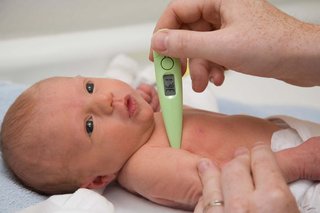
Ideally, you need a digital thermometer to get a fast, accurate reading.
You can buy these online or from pharmacies and most large supermarkets.
To take your child's temperature:
- Hold them comfortably on your knee and put the thermometer in their armpit – always use the thermometer in the armpit with children under 5 years.
- Gently, but firmly, hold their arm against their body to keep the thermometer in place for however long it says in the manufacturer's instructions – usually about 15 seconds. Some digital thermometers beep when they're ready.
- The display on the thermometer will then show your child's temperature.
How can I make sure the reading is accurate?
If you use a digital thermometer in your child's armpit and follow the manufacturer's instructions carefully, you should get an accurate reading.
There are a few things that can slightly alter the reading – for example, if your child has been:
- wrapped up tightly in a blanket
- in a very warm room
- very active
- cuddling a hot water bottle
- wearing a lot of clothes
- having a bath
If this is the case, allow them to cool down for a few minutes, but do not let them get cold or shivery, then take their temperature again to see if there's any change.
Other types of thermometer
You can buy other types of thermometer, but they may not be as accurate as a digital thermometer for taking a baby or young child's temperature:
- ear (tympanic) thermometers – these allow you to take a temperature reading from the ear and are quick but expensive; they can give misleading readings if you do not put them in the ear correctly, which is more likely to happen with babies because their ear holes are so small
- strip-type thermometers – these are held against the forehead and are not an accurate way of taking a temperature. They show the temperature of the skin, rather than the body
You should never use an old-fashioned glass thermometer containing mercury. These can break, releasing small splinters of glass and highly poisonous mercury. They're no longer used in hospitals and you cannot buy them in shops.
If your child is exposed to mercury, get medical advice immediately.
What causes a high temperature in children?
A high temperature is usually a sign that your child's body is trying to fight an infection.
Some babies and young children get a high temperature after having their vaccinations. This should go away quite quickly by itself. If you're concerned, speak to a health visitor or GP.
What should I do if my baby has a high temperature?
You can usually look after your baby or child at home when they have a high temperature. Make sure you give them plenty of drinks, to avoid dehydration. If you're breastfeeding, offer your baby plenty of feeds.
Non-urgent advice: Ask for an urgent GP appointment or call NHS 111 if your child:
- your child has other signs of illness, such as a rash, as well as a high temperature
- your baby's temperature is 38C or higher if they're under 3 months old
- your baby's temperature is 39C or higher if they're 3 to 6 months old
Immediate action required: Call 999 or go to A&E if a baby or young child has a high temperature and:
- a rash that does not fade when you roll a glass over it
Read more about what to do if your child has a high temperature.