Main symptoms of melanoma skin cancer
A new mole or a change in an existing mole may be signs of melanoma.
Melanomas can appear anywhere on your body, but they're more common in areas that are often exposed to the sun.
Some rarer types can affect the eyes, soles of the feet, palms of the hands or genitals.
Check your skin for any unusual changes. Use a mirror or ask a partner or friend to check any areas you cannot see.
Mole with an uneven shape or edges
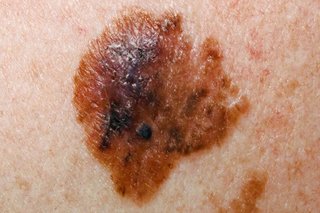
Normal moles are usually round with smooth edges.
Melanomas are often an uneven shape. They may have 2 different shaped halves and uneven edges.
Mole with a mix of colours
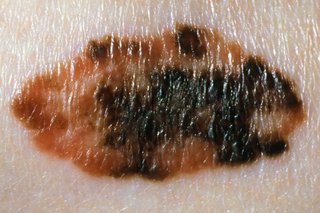
Normal moles are usually only 1 colour.
Melanomas are often a mix of 2 or more colours.
Large mole
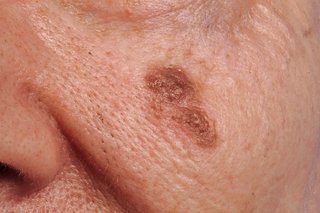
Normal moles are usually small. They're often about the same size as the end of a pencil or smaller.
Melanomas tend to be bigger, often more than 6mm wide. But they can sometimes be smaller if they're diagnosed early.
Mole that changes over time
Normal moles usually do not change over time.
A mole that changes size, shape or colour may be a melanoma.
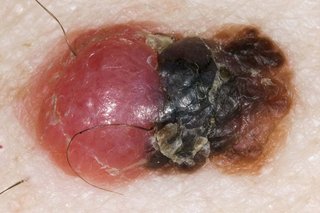
Other signs to look out for include moles that are:
- swollen and sore
- bleeding
- itchy
- crusty
When and where to get medical help
It's important to get any changes to a new or existing mole, such as changes in size, shape or colour, checked by a GP.
Non-urgent advice: See a GP if:
- you have a mole that's changed size, shape or colour
- you have a mole that's painful or itchy
- you have a mole that's inflamed, bleeding or crusty
- you have a new or unusual mark on your skin that has not gone away after a few weeks (including on the palms of your hands or soles of your feet)
- you have a dark area under a nail that has not been caused by an injury
Finding a melanoma as early as possible can mean it's easier to treat.
What happens at the GP appointment
You will be asked some questions about your health, family medical history, medical conditions and your symptoms.
Tell the GP if you have a mole, freckle or other area of skin that's recently changed. Also tell them if you or a member of your family has had skin cancer in the past.
The GP will look at your mole and any other areas of affected skin. They may ask you if they can take a photograph of it to send to a specialist (dermatologist) to look at. This is called teledermatology.
Referral to a specialist
You may get an urgent referral for more tests or to see a specialist in hospital if the GP thinks you have symptoms that could be cancer. This does not definitely mean you have cancer.