Symptoms of erythema multiforme
The main symptom of erythema multiforme is a rash.
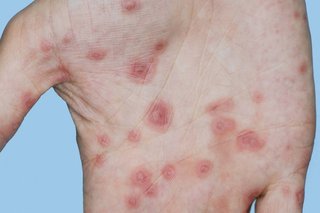
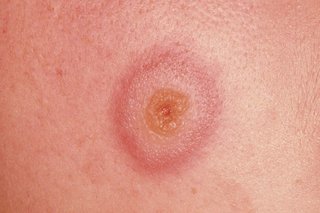
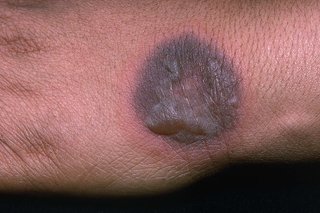
Sometimes you can get the rash inside your mouth, or on your lips, eyes, anus or genitals. This can be painful.
Other symptoms
You may also have other symptoms such as:
- a high temperature
- headache
- body aches and pains
- feeling generally unwell
When and where to get medical help
You should get medical help if you think you may have erythema multiforme. It usually does not cause serious problems, but sometimes you may need urgent help or treatment in hospital.
Non-urgent advice: See a GP if:
- you have symptoms of erythema multiforme
- erythema multiforme keeps coming back
It may be possible to treat the cause of your symptoms.
Urgent advice: Ask for an urgent GP appointment or get help from NHS 111 if:
You think you have erythema multiforme and:
- the rash is inside your mouth, or on your lips, eyes, anus or genitals
- the rash is painful
- you're finding it difficult to eat or pee
- you have a high temperature or body aches and pain, or you feel hot, cold or shivery
- the rash appeared after your started taking a new medicine
You can call 111 or get help from 111 online.
Immediate action required: Call 999 or go to A&E if:
- your lips, mouth, throat or tongue suddenly become swollen
- you're breathing very fast or struggling to breathe (you may become very wheezy or feel like you're choking or gasping for air)
- your throat feels tight or you're struggling to swallow
- your skin, tongue or lips turn blue, grey or pale (if you have black or brown skin, this may be easier to see on the palms of your hands or soles of your feet)
- you suddenly become very confused, drowsy or dizzy
- someone faints and cannot be woken up
- a child is limp, floppy or not responding like they normally do (their head may fall to the side, backwards or forwards, or they may find it difficult to lift their head or focus on your face)
You or the person who's unwell may also have a rash that's swollen, raised or itchy.
These can be signs of a serious allergic reaction (anaphylaxis). Anaphylaxis needs immediate treatment in hospital.
Find your nearest A&EDo not drive to A&E. Ask someone to drive you or call 999 and ask for an ambulance.
Bring any medicines you take with you.
Treatment for erythema multiforme
Erythema multiforme usually gets better on its own in 2 to 4 weeks.
Sometimes, you may need:
- moisturisers or steroid creams to speed up recovery and help ease symptoms like itching
- treatment for the infection that's causing it, such as antiviral medicine for a virus
Causes of erythema multiforme
It's not known exactly why some people get erythema multiforme. It's often caused by an infection, such as the herpes simplex virus (which also causes cold sores) or a bacteria that causes lung conditions like pneumonia.
It can sometimes be caused by some vaccines or medicines such as non-steroidal anti-inflammatory drugs (NSAIDs), antibiotics, statins and medicines for epilepsy.
If it's caused by a medicine, you usually need to stop taking it. But do not stop taking any medicines without talking to a doctor first.
Page last reviewed: 09 September 2026
Next review due: 09 September 2029