Why an EEG is done
You might have an EEG (electroencephalogram) to diagnose or monitor a brain condition.
The main condition it's used for is epilepsy. A healthcare professional may refer you for one if you have symptoms of epilepsy such as seizures.
Other conditions it can be used for include sleep conditions and encephalitis (inflammation of the brain).
Preparing for an EEG
There are some things you can do to help you prepare for an EEG (electroencephalogram), such as:
- make sure you have clean, dry hair with no products like gel or wax in
- remove any weaves, braids or wigs before the test, if you wear them
- bring a hairbrush or comb with you to tidy your hair after the test
You can usually eat and drink as normal before the test.
A healthcare professional will tell you if you need to do anything else to prepare.
Let the person doing the EEG know if you'd like someone else to be in the room with you (a chaperone). This could be someone you know, a nurse or a trained member of staff.
What happens during an EEG
An EEG (electroencephalogram) is usually done by a specially trained healthcare professional at a hospital.
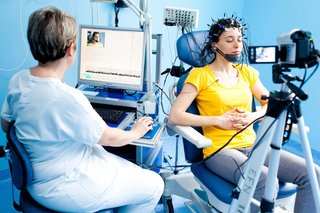
The main steps in an EEG are:
- You'll be asked to sit or lie down.
- A healthcare professional measures your head and marks on your scalp where the electrodes will be placed.
- Small silver discs, called electrodes, are attached to your scalp using a sticky paste.
- The electrodes are connected by wires to an EEG recording machine.
- Electrical activity from your brain is recorded on the machine and a healthcare professional will monitor the recording.
- You may be asked to do certain tasks, such as open and close your eyes, breathe deeply for a few minutes, or look at a flashing light, while the recording is taken.
The test is painless and usually takes about an hour.
When the test is finished, the electrodes will be removed and your scalp will be cleaned. Your hair may still feel sticky until you wash the paste out yourself.
You'll usually be able to go home after the test and carry on with your usual activities.
Other types of EEG
There are several types of EEG. How long they take depends on the type you have.
Other types include:
- sleep EEG – done in hospital while you're asleep
- sleep-deprived EEG – done after you've been asked not to sleep for a certain amount of time the night before (you will not be able to drive after this test so should arrange to get picked up)
- ambulatory EEG – you wear a portable recording machine while you do your usual daily activities
- video telemetry EEG – a video recording is taken during the test, usually over a few days in hospital
Getting your EEG results
It may be a few days or weeks before you get your EEG (electroencephalogram) results because they'll need to be analysed by a specialist.
You may need a follow-up appointment to talk about your EEG results.
If you've not heard anything after a few weeks, contact the doctor who referred you.
The GP, nurse or specialist should talk to you about your results and explain what happens next.
Sometimes you may need more tests, such as further EEGs.
Ask to talk to a healthcare professional if you have questions about your results, or do not understand them.
Page last reviewed: 18 February 2026
Next review due: 18 February 2029