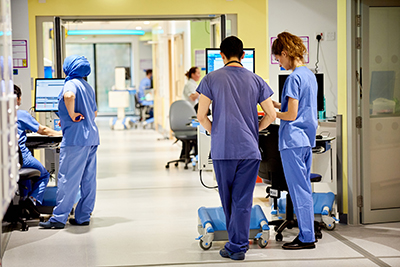
Since its launch in 1948, the NHS has grown to become the world’s largest publicly funded health service. It is also one of the most efficient, most egalitarian and most comprehensive.
The system was born out of a long-held ideal that good healthcare should be available to all, regardless of wealth – and that principle remains at its core. With the exception of charges for some prescriptions and optical and dental services, the NHS remains free at the point of use for anyone who is resident in the UK – more than 60m people. It covers everything from antenatal screening and routine treatments for coughs and colds to open heart surgery, accident and emergency treatment and end-of-life care.
Although funded centrally from national taxation, NHS services in England, Northern Ireland, Scotland and Wales are managed separately. While some differences have emerged between these systems in recent years, they remain similar in most respects and continue to be talked about as belonging to a single, unified system.
Scale
Nationwide, the NHS employs more than 1.5m people. Of those, just short of half are clinically qualified, including some 90,000 hospital doctors, 35,000 general practitioners (GPs), 400,000 nurses and 16,000 ambulance staff.
Only the Chinese People’s Liberation Army, the Wal-Mart supermarket chain and the Indian Railways directly employ more people.
The NHS in England is far and away the biggest part of the system, catering to a population of 50m and employing more than 1.3m people. The NHS in Scotland, Wales and Northern Ireland employ 158,000, 71,000 and 67,000 people respectively.
The number of patients using the NHS is equally mind-boggling. On average, it deals with 1m patients every 36 hours - that’s 463 people a minute or almost 8 a second. Each week, 700,000 will visit an NHS dentist, while a further 3,000 will have a heart operation. Each GP in the nation’s 10,000-plus practices sees an average of 140 patients a week.
Funding
When the NHS was launched in 1948 it had a budget of £437 million (roughly £9 billion at today’s value). In 2007/8 it received 10 times that amount - more than £90 billion.
This equates to an average rise in spending over the full 60-year period of about 3% a year once inflation has been taken into account. However, in recent years investment levels have been double that to fund a major modernisation programme.
Some 60% of the NHS budget is used to pay staff. A further 20% pays for drugs and other supplies, with the remaining 20% split between buildings, equipment and training costs on the one hand and medical equipment, catering and cleaning on the other. Nearly 80% of the total budget is distributed by local trusts in line with the particular health priorities in their areas.
The money to pay for the NHS comes directly from taxation that, according to independent bodies such as the King’s Fund, remains the “cheapest and fairest” way of funding health care when compared with other systems. The 2007/8 budget roughly equates to a contribution of £1,500 for every man, woman and child in the UK.
Structure
The Department of Health (DH) is in overall charge of the NHS with a cabinet minister reporting as secretary of state for health to the prime minister. The department has control of England’s 10 Strategic Health Authorities (SHAs), which oversee all NHS activities in England. In turn, each SHA is responsible for the strategic supervision of all the NHS trusts in its area. The devolved administrations of Scotland, Wales, and Northern Ireland run their local NHS services separately.
Performance
Measuring the efficiency of healthcare systems is notoriously difficult. The NHS – in common with other healthcare systems – has never consistently and systematically measured changes in its patients’ health. As a result, it’s impossible to say exactly how much extra “health” is created for each pound spent.
Nevertheless, in the UK life expectancy has been rising and infant mortality has been falling since the NHS was established. Both figures compare favourably with other nations. Surveys also show that patients are generally satisfied with the care they receive from the NHS. Importantly, people who have had recent direct experience of the NHS tend to report being more satisfied than people who have not.
Last reviewed: 23/03/2009
Next review due: 23/03/2011