Mouth ulcers are common and should clear up on their own within a week or 2. But see a GP or dentist if you have a mouth ulcer that lasts longer than 3 weeks.
How you can treat mouth ulcers yourself
Mouth ulcers are rarely a sign of anything serious, but may be uncomfortable to live with.
They need time to heal and there's no quick fix.
Avoiding things that irritate your mouth ulcer should help:
- speed up the healing process
- reduce pain
- reduce the chance of it returning
Do
-
use a soft-bristled toothbrush
-
drink cool drinks through a straw
-
eat softer foods
-
get regular dental check-ups
-
eat a healthy, balanced diet
Don’t
-
do not eat very spicy, salty or acidic food
-
do not eat rough, crunchy food, such as toast or crisps
-
do not drink very hot or acidic drinks, such as fruit juice
-
do not use toothpaste containing sodium lauryl sulphate
A pharmacist can help with mouth ulcers
A pharmacist can recommend a treatment to speed up healing, prevent infection or reduce pain, such as:
- antimicrobial mouthwash
- a painkilling tablet, mouthwash, gel or spray
- corticosteroid lozenges
- a salt (saline) mouthwash
You can buy these without a prescription.
How to rinse with salt mouthwash
- Dissolve half a teaspoon of salt in a glass of warm water – warm water helps salt dissolve.
- Rinse your mouth with the solution, then spit it out – do not swallow it.
- Repeat as often as you like.
Non-urgent advice: See a dentist or GP if your mouth ulcer:
- lasts longer than 3 weeks
- is different to other mouth ulcers you've had before, for example if it's bigger than usual or near the back of your throat
- bleeds or becomes more painful and red – this may be a sign of an infection
Although most mouth ulcers are harmless, a long-lasting mouth ulcer is sometimes a sign of mouth cancer. It's best to get it checked.
You should also see a GP if you have other symptoms such as:
- ulcers anywhere else on your body, such as your skin or genitals
- painful, red or swollen joints
Treatment from a dentist or GP
A GP or dentist may prescribe stronger medicine to treat severe, persistent or infected mouth ulcers.
Possible treatments include:
- steroids given as either a mouth spray, tablets that dissolve in your mouth or tablets that can be dissolved in water
- painkilling gels, ointments, sprays or tablets
- mouthwashes to kill or remove any germs in your mouth
Check if you have a mouth ulcer
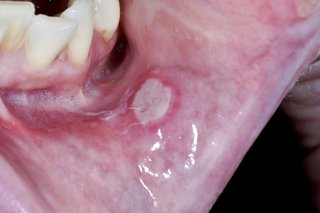
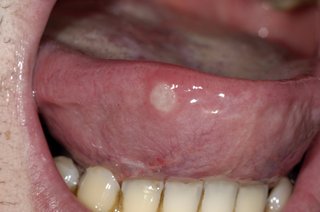
You may have more than 1 ulcer at a time.
Mouth ulcers are not contagious and should not be confused with cold sores.
Cold sores appear on the lips or around the mouth and often begin with a tingling, itching or burning sensation. They can also appear as a small group of pinhead-sized ulcers inside the mouth.
Causes of mouth ulcers
Most single mouth ulcers are caused by things you can try to avoid, such as:
- biting the inside of your cheek
- badly fitting dentures, braces, rough fillings or a sharp tooth
- cuts or burns while eating or drinking – for example, hard food or hot drinks
- a food intolerance or allergy
- damaging your gums with a toothbrush or irritating toothpaste
- feeling tired, stressed or anxious
Sometimes they're triggered by things you cannot always control, such as:
- hormonal changes – such as during pregnancy
- your genes – some families get mouth ulcers more often
- a vitamin deficiency, such as iron, zinc, folic acid, vitamin B or vitamin D
- medicines – including some NSAIDs, beta blockers or nicorandil
- stopping smoking – people may develop mouth ulcers when they first stop smoking
If you have several mouth ulcers, it can be a symptom of:
- hand, foot and mouth disease, which also causes a rash on the hands and feet
- oral lichen planus, which causes a white, lacy pattern inside the cheeks
- Crohn's disease and coeliac disease (conditions that affect the digestive system)
- a weakened immune system from having a condition like HIV or lupus
Page last reviewed: 11 March 2024
Next review due: 11 March 2027