An ingrown toenail is a common problem where the nail grows into the toe. It can be painful, but there are things you can do to ease the pain.
Check if you have an ingrown toenail
You usually get an ingrown toenail on your big toe. But you can get them on any toe.
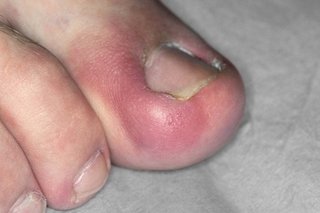
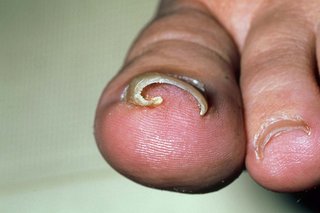
Your toe can also get infected.
Signs of an infected toe include:
- pus coming out of it
- you feel hot or shivery
How to treat an ingrown toenail at home
If you go to a GP with an ingrown toenail, they'll usually suggest you try these things first.
Do
-
soak your foot in warm, salty water to help soften the skin around your toe and reduce the chances of infection
-
keep your foot dry for the rest of the day
-
wear wide, comfortable shoes or sandals
-
take paracetamol or ibuprofen to ease the pain
Don’t
-
do not cut your toenail – leave it to grow out
-
do not pick at your toe or toenail
-
do not wear tight, pointy shoes
A pharmacist can help with an ingrown toenail
You can ask a pharmacist about:
- treatments to help ease the pain and prevent an infection
- whether you need to see a GP
Non-urgent advice: See a GP if:
- treating your ingrown toenail at home is not helping
- your toe is painful and swollen with pus coming out of it
- you have a very high temperature or you feel hot or shivery
- you have diabetes and an ingrown toenail – foot problems can be more serious if you have diabetes
Treatments for an ingrown toenail
A GP can:
- check your toe to see if it's an ingrown toenail
- give you antibiotics if your toenail is infected
If you have a badly ingrown toenail, they may refer you to a foot specialist (podiatrist).
Treatment from a foot specialist
A podiatrist may offer further treatments, such as:
- cutting away part of the nail
- removing the whole nail
You'll have an injection of local anaesthetic to numb your toe when this is done.
Referral to a podiatrist on the NHS may not be available to everyone and waiting times can be long. You can pay to see a podiatrist privately.
Self-refer to a podiatrist
If you have an ingrown toenail, you might be able to refer yourself directly to a podiatrist without seeing a GP.
To find out if there are any services in your area:
- ask the reception staff at your GP surgery
- check your GP surgery’s website
- contact your integrated care board (ICB) – find your local ICB
- search online for NHS podiatrists near you
How to prevent ingrown toenails
To help stop ingrown toenails:
- do not cut your toenails too short
- cut straight across the nail, not the edges
- do not wear shoes that are too tight or do not fit properly
- keep your feet clean and dry them thoroughly
Page last reviewed: 24 January 2022
Next review due: 24 January 2025