Scabies is an itchy rash caused by mites. It’s spread through close skin contact, and anyone can get it. It should be treated quickly to stop it spreading.
Check if it's scabies
The symptoms of scabies are:
- intense itching, especially at night
- a raised rash or spots
The spots may look red. They are more difficult to see on brown or black skin, but you should be able to feel them.
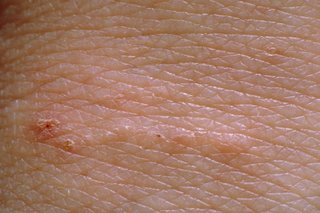
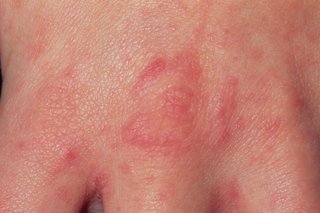
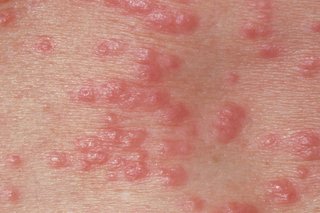
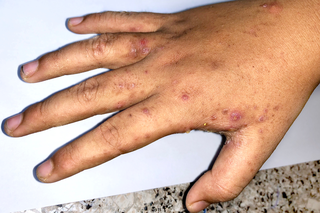
The scabies rash usually spreads across the whole body, apart from the head and neck. It often affects skin between the fingers, around the wrists, under the arms, and around the waist, groin and bottom.
However, older people and young children may develop a rash on their head, neck, palms and soles of their feet.
People with a weakened immune system can sometimes get a rare and very contagious type of scabies, called crusted scabies. The main symptom is a crusted, flaky rash that often affects the elbows, knees, hands and feet.
If you’re not sure it's scabies
Many other things can cause itchy skin and rashes in babies and children.
A pharmacist can help with scabies
Scabies is not usually a serious condition, but it does need to be treated.
A pharmacist will recommend a cream or lotion that you apply over your whole body. It's important to read the instructions carefully.
Let the pharmacist know if you're breastfeeding or pregnant.
You'll need to repeat the treatment 1 week later.
Scabies is very infectious, but it can take up to 8 weeks for the rash to appear.
Everyone in your home needs to be treated at the same time, even if they do not have symptoms. But do not use pharmacy treatments on children under 2 years old, they will need to see a GP.
Anyone you’ve had sexual contact with in the past 8 weeks should also be treated.
Things you can do during treatment to stop scabies spreading
If you or someone in your family has scabies there are things you can do to reduce the risk of it spreading.
Do
-
wash all bedding and clothing in the house at 60C or higher, and if possible in a hot dryer, on the first day of treatment
-
put clothing that cannot be washed in a sealed bag for 3 days until the mites die
Don’t
-
do not have sex or close physical contact until you have completed the full course of treatment
-
do not share bedding, clothing or towels with someone with scabies
How long it takes to get rid of scabies
You or your child can go back to work or school 24 hours after the first treatment.
Although the treatment kills the scabies mites quickly, the itching can carry on for a few weeks.
Non-urgent advice: See a GP if:
- your child is under 2 years old and has symptoms of scabies or someone else in your household has scabies
- you have scabies and think your skin may be infected or you have another skin condition, such as eczema
- you have a crusted, flaky rash on your elbows, knees, hands or feet
- you’ve used pharmacy treatment for scabies and your skin is still itching 2 to 4 weeks after treatment has finished
Scabies can spread easily
Scabies spreads through close skin contact, including sexual contact. You cannot get scabies from pets.
People who live or work closely together in nurseries, university halls of residence or nursing homes are more at risk.
Important: Scabies and hygiene
Anyone can get scabies. It has nothing to do with poor hygiene.
Complications of scabies
Scratching the rash can cause skin infections like impetigo.
Page last reviewed: 21 November 2023
Next review due: 21 November 2026