Impetigo is a skin infection that's very contagious but not usually serious. It often gets better in 7 to 10 days if you get treatment. Anyone can get it, but it's very common in young children.
Check if you have impetigo
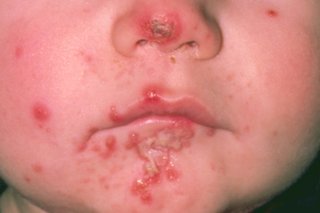
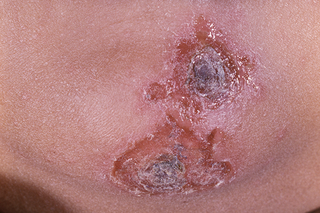
Impetigo starts with red sores or blisters, but the redness may be harder to see in brown and black skin.
The sores or blisters quickly burst and leave crusty, golden-brown patches.
The patches can:
- look a bit like cornflakes stuck to your skin
- get bigger
- spread to other parts of your body
- be itchy
- sometimes be painful
If you're not sure it's impetigo
Impetigo can look similar to other skin conditions.
| Skin symptoms | Possible cause |
|---|---|
| Blisters on lips or around the mouth | Cold sores |
| Itchy, dry, cracked, sore | Eczema |
| Itchy blisters | Shingles, chickenpox |
Non-urgent advice: See a GP if you or your child:
- might have impetigo
- had treatment for impetigo but the symptoms change or get worse
- had impetigo before and it keeps coming back
Impetigo is very infectious. Check with the GP before you go into the surgery. They may suggest a phone consultation.
A pharmacist can help with impetigo
You can also speak to a pharmacist if you think you or your child have impetigo. They can provide the same treatment you would get from a GP, if you need it.
Treatment for impetigo
A GP or pharmacist will check it's not something more serious, like cellulitis.
If it's impetigo, you may need:
- hydrogen peroxide cream if it's in one area
- antibiotic cream or tablets if it's more widespread
- antibiotic tablets if you have bullous impetigo or feel very unwell
Babies and people with a weakened immune system may need antibiotic tablets to stop the infection causing more serious problems.
If your impetigo keeps coming back
A GP can take a swab from your skin to check for the bacteria that causes impetigo. They may also take a swab from inside your nose.
They might prescribe an antiseptic body wash, nasal ointment, or both, to try to clear the bacteria and stop the impetigo coming back.
Important: Make sure you finish treatment
Do not stop taking the antibiotic tablets early, even if the impetigo starts to clear up.
Stop impetigo spreading or getting worse
Impetigo can easily spread to other parts of your body or to other people until it stops being contagious.
It stops being contagious:
- 48 hours after you start using hydrogen peroxide cream or antibiotics prescribed by your GP
- when the patches dry out and crust over (if you do not get treatment)
To help stop impetigo spreading or getting worse while it's still contagious:
Do
-
stay away from school or work
-
keep sores, blisters and crusty patches clean and dry
-
cover them with loose clothing or gauze bandages
-
wash your hands frequently
-
wash flannels, sheets and towels at a high temperature
-
wash or wipe down toys with detergent and warm water if your children have impetigo
Don’t
-
do not touch or scratch sores, blisters or crusty patches – this also helps stop scarring
-
do not have close contact with children or people with diabetes or a weakened immune system (if they're having chemotherapy, for example)
-
do not share flannels, sheets or towels
-
do not prepare food for other people
-
do not go to the gym
-
do not play contact sports like football
How to avoid impetigo
Impetigo usually infects skin that's already damaged.
To avoid spreading the infection to other areas of your body and to other people:
- keep cuts, scratches and insect bites clean – for example, by washing them with warm water and soap
- get treatment for skin conditions, like eczema
Page last reviewed: 18 March 2021
Next review due: 18 March 2024