An infected piercing can be serious if it's not treated quickly. Get immediate medical help if you think your piercing is infected.
Check if you have an infected piercing
What's normal for a new piercing
For the first few weeks a new piercing might:
- be tender, itchy, and the surrounding area may look slightly red on white skin, or a little darker than usual on dark skin
- produce a pale fluid that forms a crust
If you've had an ear or nose cartilage piercing, small lumps can sometimes form around the piercing.
The lumps, called granulomas, are trapped fluid. You can treat them by soaking a pad in warm water then holding the pad against them once a day.
Signs of an infection
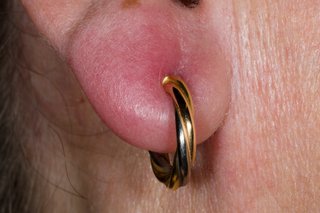
Your piercing might be infected if:
- the area around it is swollen, painful, hot, very red or dark (depending on your skin colour)
- there's blood or pus coming out of it – pus can be white, green or yellow
- you feel hot or shivery or generally unwell
Urgent advice: Ask for an urgent GP appointment or get help from NHS 111 if:
- you think your piercing might be infected
Leave your jewellery in, unless a doctor tells you to take it out.
You can call 111 or get help from 111 online.
Treatment for infected piercings
You may need antibiotics if your piercing is infected. This can be a cream, ointment, or tablets.
How to prevent infections in new piercings
There are things you can do to reduce the risk of a piercing getting infected.
Do
-
choose a qualified, experienced and licensed piercer
-
clean your piercing twice a day
-
use warm, salty water to soften any crusting
-
gently turn the jewellery while cleaning the piercing
-
use a clean paper towel to dry the piercing
-
gargle with salty water or an alcohol-free mouthwash if you have a mouth piercing
Don’t
-
do not do your own piercings (you're much more likely to get an infection)
-
do not use cotton wool to clean the piercing (use a cotton bud or pad)
-
do not pick at any crusting
-
do not twist or turn jewellery when the piercing is dry
-
do not use a towel to dry the piercing
-
do not have sex until a genital piercing has healed
-
do not have oral sex until a mouth piercing has healed
-
do not go swimming for the first 24 hours after a piercing
Things to ask your piercer
If you're thinking about getting a piercing, ask the piercer:
- to explain what they're going to do
- whether there are any risks
- how to care for your piercing
- how long it will take to heal
Page last reviewed: 18 April 2023
Next review due: 18 April 2026