Blood clots 

Introduction 

Find out how well your hospital tackles blood clot risk

You can use our hospital scorecard to find out how well your local hospital tackles blood clot risk.  Access a scorecard by entering your postcode, and the procedure you need to have in the search tool. You’ll find risk assessments for blood clots under 'safety' in the topics drop down menu.

Every year, more than one in 1,000 people develop a blood clot in a vein. It’s known as venous thromboembolism (VTE) and it’s a serious, potentially fatal, medical condition.

Although serious, most blood clots can be completely avoided. The key is to be aware if you’re at risk and take some simple preventive steps.

This article concentrates on blood clots in a vein. If you want information on blood clots in an artery, which is a common cause of heart attack and stroke, you can read more in our section on arterial thrombosis.

Who gets blood clots?

Although it can happen to anyone, you’re more at risk of blood clots if you can’t move around a lot or if you’re unwell.

You’ve probably heard of blood clots linked to long-haul plane journeys or the  contraceptive pill, but you’re much more likely to get a blood clot after going into hospital. In fact, about two-thirds of all blood clots happen during or just after a stay in hospital.

Read more about how and why blood clots occur

Hospital blood clots

Each year, more than 25,000 people in the UK die from hospital-related blood clots, which is many more deaths than from hospital superbugs, road accidents or breast cancer.

The Government recognises that deaths from hospital blood clots are preventable, and has asked staff to assess the blood clot risk of every single patient admitted to hospital and to provide protection against blood clots if necessary.

Am I at risk?

When you arrive at hospital, you should be checked for your risk of blood clots. Hospital staff will record your age and weight and ask you about your general health. The assessment will also take into account the reason for your hospital stay.

Your risk of clots is likely to be higher, for instance, if you’re having a major operation, if you’re going to be confined to bed for long periods, or you’re very overweight.

Some people also have certain ‘risk factors’ that make them more likely to get a clot while in hospital. For example, if you take the combined contraceptive pill or HRT, you’re over-60, you’re pregnant or you’ve recently had a baby, or if you’ve had a previous blood clot.

If the assessment shows that you’re at risk of a blood clot, you should be offered preventive treatment. The options include blood-thinning drugs, compression stockings, or foot pumps to keep your blood circulating and help prevent any clots forming.

Hospital staff should check whether bleeding might be a problem before offering you a drug to help prevent a clot.

If you’ve been admitted to hospital and you haven’t had your blood clot risk checked, it’s important that you ask a doctor or nurse. Equally, if you’ve been told you’re at risk of clots and have been given medicine, stockings or other devices, it’s important that you understand how to use them properly.

Don’t be afraid to ask hospital staff about reducing your risk of blood clots – it could save your life.

Questions you might like to ask your healthcare team about blood clots are:

  • am I at risk of blood clots?
  • how likely am I to have bleeding problems?
  • What happens if I have problems with a drug or treatment I am having to help prevent clots?

How can I help myself?

You can help yourself before coming into hospital by:

  • losing any excess weight
  • stopping smoking
  • talking to your doctor if you take HRT or
  • the combined contraceptive pill. You may need to stop them a few weeks before your op.

While you’re in hospital, you will reduce your chances of a blood clot if you:

  • drink plenty of fluids to keep hydrated
  • wear your compression stockings day and night (except when you’re washing)
  • wear any other compression devices you’ve been given
  • take any blood-thinning medicines you’ve been prescribed
  • get up and move around as soon as you’re advised to

How to tell if you have a blood clot

The term venous thromboembolism (VTE) covers two types of venous blood clots:

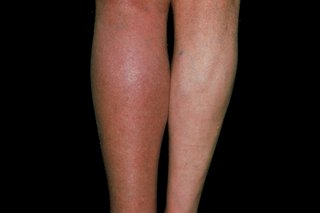
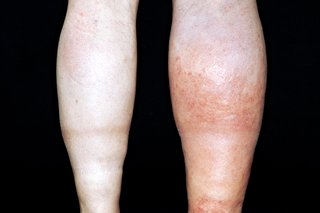
A DVT is a blood clot in a deep vein, usually in the leg. You may have no symptoms at all with a DVT or you may get a cramping pain, redness or swelling in the leg. Read more about the symptoms of DVT.

Occasionally, a clot in a vein dislodges and forms what is known as an embolus and moves to the lungs. This is a more dangerous condition, called pulmonary embolism (PE). Known as the ‘sudden killer’ because it can strike so quickly, PE can cause breathlessness, chest pain and sudden collapse. Read more about the symptoms of PE.

If, after you’ve left hospital, you develop any of the symptoms of a blood clot or you suspect you may have a blood clot, see your GP or go to your nearest accident and emergency (A&E) department as soon as possible. Blood clots can be treated if they’re spotted in time.
Read more about the treatment of blood clots.

Last reviewed: 08/01/2013

Next review due: 08/01/2015

Ratings

How helpful is this page?

Average rating

Based on 136 ratings

All ratings

Add your rating

'I got DVT from flying'

Mark Pownall developed deep vein thrombosis (DVT) on a long-haul flight from New Orleans to London.