Some types of worms can infect people. Some can be caught in the UK and others are only caught abroad. Most worm infections are not serious and can be easily treated with medicine.
A pharmacist can help with worm infections
A pharmacist can help if you have:
- small, white worms in your poo that look like pieces of thread
- extreme itching around your anus, particularly at night
This is probably threadworms.
They're common in the UK and can be treated with medicine from a pharmacy.
Non-urgent advice: See a GP if you:
- find a large worm, a piece of worm or worm eggs in your poo
- have a red, itchy worm-shaped rash on your skin
- have sickness, diarrhoea or a stomach ache for longer than 2 weeks
- are losing weight for no reason
These could be symptoms of something like roundworm, hookworm or tapeworm.
These infections are usually caught while travelling. They can take a long time to cause symptoms, so tell the GP if you have been abroad in the last 2 years.
See what different worms look like
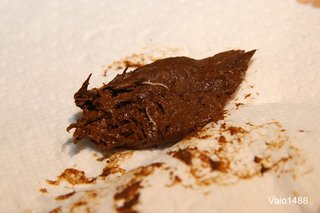
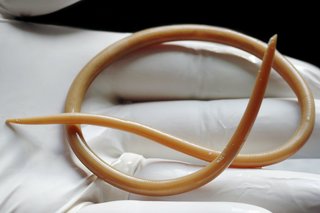
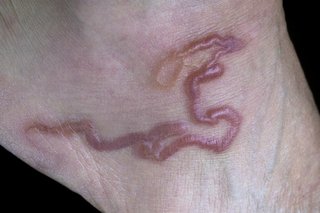
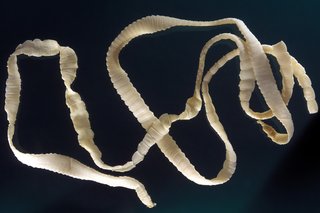
Treatment to get rid of worms
It does not matter which type of worm you have – all worm infections are treated in a similar way.
You might be asked to provide a sample of poo so it can be tested for worm eggs.
If you have worms, a GP will prescribe medicine to kill them. You take this for 1 to 3 days. The people you live with may also need to be treated.
Any worms in your gut will eventually pass out in your poo. You may not notice this.
To avoid becoming infected again or infecting others, it's very important during the weeks after starting treatment to wash your hands:
- after going to the toilet
- before eating or preparing food
- regularly during the day
Important
Go back to the GP if your symptoms do not get better in 2 weeks or you keep passing live worms in your poo.
How you catch worms
Worms are mainly spread in small bits of poo from people with a worm infection. Some are caught from food.
You can get infected by:
- touching objects or surfaces with worm eggs on them – if someone with worms does not wash their hands
- touching soil or swallowing water or food with worm eggs in it – mainly a risk in parts of the world without modern toilets or sewage systems
- walking barefoot on soil containing worms – only a risk in parts of the world without modern toilets or sewage systems
- eating raw or undercooked beef, pork or freshwater fish (like salmon or trout) containing baby worms – more common in parts of the world with poor food hygiene standards
You can catch some worms from pets, but this is rare.
How to prevent worm infections
There are some things you can do to help prevent worm infections.
Do
-
wash your hands before eating or preparing food, and after touching soil or using the toilet
-
only drink bottled or boiled water in high-risk areas (places without modern toilets or sewage systems)
-
thoroughly wash garden-grown fruit and vegetables
-
deworm pet dogs and cats regularly
-
dispose of dog and cat poo in a bin as soon as possible
Don’t
-
do not let children play in areas where there's dog or cat poo
-
do not eat raw fruit and vegetables in high-risk areas
-
do not walk barefoot in high-risk areas
-
do not eat raw or undercooked pork, beef or freshwater fish
Page last reviewed: 20 November 2023
Next review due: 20 November 2026