Urticaria (hives) 

Introduction 

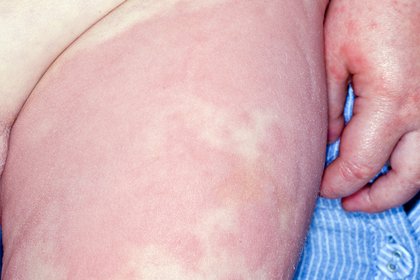
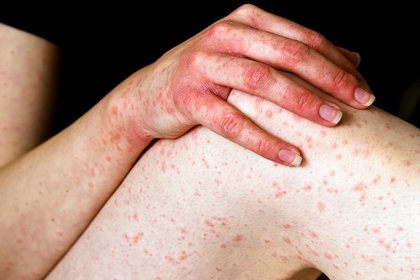
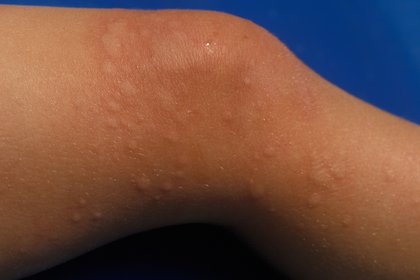
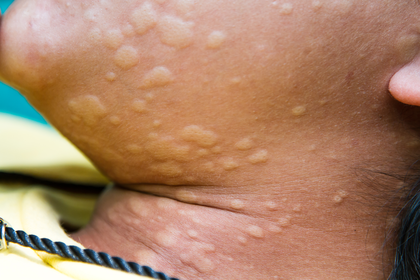
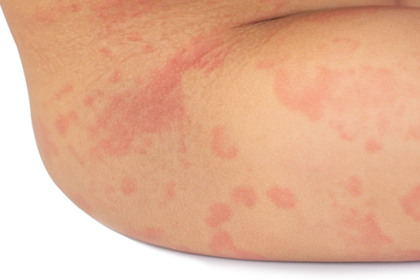
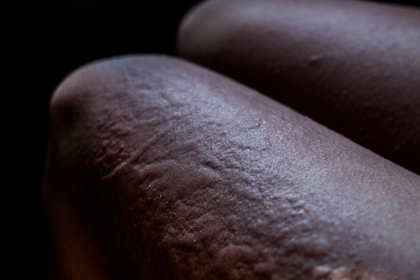
Urticaria (also known as hives, welts or nettle rash) is a raised, itchy skin rash 

Anaphylaxis

Urticaria can be one of the first symptoms of a severe allergic reaction known as anaphylaxis.

Other symptoms of anaphylaxis include:

  • swelling of your eyes, lips, hands and feet
  • narrowing of your airways which can cause breathing difficulties and wheezing
  • a feeling of impending doom as if something terrible is going to happen

Anaphylaxis should always be treated as a medical emergency. If you suspect that you or somebody else is experiencing anaphylaxis, immediately dial 999 for an ambulance and tell the operator that you think anaphylaxis has occurred.

Read about the treatment of anaphylaxis.

Keep skin healthy

Keep skin healthy in all weathers. Plus common skin conditions and treatments, including acne

Urticaria (also known as hives, welts or nettle rash) is a raised, itchy rash that appears on the skin. The rash can be limited to one part of the body or spread across large areas of the body.

The affected area of skin will typically change within 24 hours, and usually the rash will settle within a few days. If it clears completely within six weeks, it is known as acute urticaria.

Less commonly, the rash can persist or come and go for longer than six weeks, often over the space of many years. Doctors refer to this as chronic urticaria.

Read more about the symptoms of urticaria.

Treating urticaria

Many cases of hives don’t need treatment as the rash often gets better within a few days. If you’re struggling with it, a medication called antihistamine usually helps. Antihistamines are available over-the-counter at pharmacies. Speak to your pharmacist for advice.

More severe cases may require a short course of steroid tablets (oral corticosteroids).

Long-term urticaria may need to be referred to a skin specialist (dermatologist) and treatment usually involves medication to relieve symptoms, while identifying and avoiding potential triggers (see below).

Read about the treatment of urticaria.

What causes urticaria?

Urticaria happens when a trigger causes high levels of histamine and other chemical messengers to be released in the skin.

These substances cause the blood vessels in the affected area of skin to open up (often causing redness or pinkness) and become leaky. This extra fluid in the tissues causes swelling and sometimes itchiness.

Histamine is released for a wide range of reasons, including:

  • an allergic reaction to substances such as latex
  • exposure to cold or heat
  • infection
  • the direct effect of certain chemicals which can be found in some types of food and medications, such as non-steroidal anti-inflammatory drugs (NSAIDs)

However, in over half of acute urticaria cases, no obvious cause can be found.

In most cases of long-term urticaria, there is no obvious cause. However, most experts think it's often caused by the immune system mistakenly attacking healthy tissue. Certain triggers make the symptoms worse, such as:

  • drinking alcohol or caffeine
  • emotional stress
  • warm temperature

Read about the causes of urticaria.

Who is affected?

Urticaria is a common condition. It is estimated that around one person in six will have hives at some point.

The condition is most common in children, women aged 30–60 years old and people with a history of allergies.

Long-term urticaria is much less common and affects around 1 in 1,000 people in England. Women are twice as likely to develop chronic urticaria than men.

Complications

Around a quarter of people with acute urticaria and half of people with chronic urticaria will also develop swelling of a deeper layer of skin.

This is known as angioedema. It can cause severe swelling in different parts of the body, such as the eyes, lips and genitals.

Read about the complications of urticaria.


Last reviewed: 01/05/2012

Next review due: 01/05/2014

Comments are personal views. Any information they give has not been checked and may not be accurate.

gingerwhinger said on 13 April 2012

Look up on You Tube a documentary about Asparteme it can cause Urticaria i should know Ive had it for 9 years. the specialist has perscribed 4 x the normal dose of Telfast in conjunction with Ranitidine 150mg which is usually taken for indigestion. normally works but i drank diet Pepsi on the week end and I'm paying for it now, i normally avoid asparteme like the plague, now you know why

Pob luc

Report this content as offensive or unsuitable

CoralHuby said on 01 March 2012

I have Addison's Disease and recently found out I have Chronic Idiosyncratic Urticaria (so now I'm living with 2 autoimmune conditions) and have no idea about any of this. I had several nasty infections down below which couldn't be traced to anything like thrush, etc. and was under constant attack of lesions everywhere on my body - and itchy is an understatement. I also developed exercise induced asthma and my hayfever got worse, all yr round.
My GP has been most unhelpful, I went to see a specialist at the hospital and waited a long time for a 'results' letter. In this letter it told me I had this and to trial different medication but nothing really in the way of support. I had taken the step myself whilst waiting frustrated and extremely uncomfortable to see a dietician who told me I was intolerent to pretty much everything! But, cutting out all the stuff I was eating before that wasn't agreeing with me, and with some new tablets (thanks to a second opinion from a different fantastic GP) seems to have done wonders (touch wood) I'm only 1 week in, so don't want to get ahead of myself but so far so good. I'm slowly going to introduce some foods back in to see if, with these tablets, my body can cope with them. On tablet is for the asthma and the other are very strong antihistamine. I also take steroids long-term for the Addisons so I'm currently rattling when I walk! I don't yet know if you have to take this tablets all the time, or for a certain period, and no one seems to hold anymore idea than I do, and I'm no doctor. I'm only 21 and was a little glum at the thought of this being the 2nd autoimmune condition of what seems like many you are prone to once you have one, but my message would be to people who think they may have this look at what you eat and don't let your doctor brush you off!!! You know your body better than anyone.

Report this content as offensive or unsuitable

alpha_beta_man said on 15 February 2012

I'm just having my second ever attack of hives - and it starts when I walk the dogs - but I've walked the dogs for many years without problem. It starts with a really itchy scalp - and then what look like insect bites appear on my body and face - just screaming to be scratched ! Absolutely no idea what is causing it - really weird. The last one went away in about 4 hours after a piriton tablet.

Report this content as offensive or unsuitable

tim1234 said on 14 January 2012

I have had several bouts of really bad chronic hives, the worst attack lasted for 6 months. The consultant told me it was an autoimmune problem caused by histamine released from my own antibodies to some threat. He suggested it was caused initially by a virus or maybe an injection. Since I had had several repeated dental injections recently I thought it was that. Since then I have been extremely careful to avoid all but the most essential injections, and to make sure I have no repeat injections within 6 months.
I have not had hives for 10 years now.

Report this content as offensive or unsuitable

neil6306 said on 25 November 2011

Absolutely gutted! Havent had my Urticaria since the late 80`s and now it has returned with a vengence. I`m a keen cyclist and although it does not stop me riding i cant do half as many miles as within an hour of stopping i blow up like a stuffed tomatoe. Got some useless anti-histamines which help a little with the itching but not a cure will have to go back to the Docs for some steriods if only for a few days relief! Sympathy to all you sufferers.

Report this content as offensive or unsuitable

la818 said on 04 November 2011

Chrissy, that is exactly what I have too. For the past 5 years, this has happened every day for about 6 months per year. Before this, there were other random spells of this, but it wasn't as frequent, only lasting a few months and not reoccurring every year. If I take antihistamines every day, most of the time it calms down, and eventually disappears, so after a while I stop. But then it starts again about a year later. Every day I will get the rash, and about 2 or 3 times a week my lip or eye will swell up too. I get the rash absolutely everywhere. It's totally unpredictable, I've had blood tests and kept diaries, and there's never a pattern. It is very frustrating and hard to live with, it sounds melodramatic, but to an extent it is ruining my life.

Report this content as offensive or unsuitable

Chrissy miss said on 02 August 2011

I am so thankful that you have all commented on this. When you have it you feel like the only person in the world that does. My rashes come up everyday, it has been controlled and even gone with medication (alot of it!) and cutting down the medication to nothing. Unfortunately it has returned and is controlled by medication but somethimes this will not work. I get it all on my legs, hips, tummy, back, shoulders, arms and face. On my face I get swollen lips and eyes. All my blood tests come back with nothing wrong. It is so frushtrating and makes me very upset. I have been suffering with this for nearly a year. I am going to see the doctor again today. If you get this the aqueous cream with menthol in really helps the itching, I have yet to try any holistic medicines as im not sure who to trust with this. Please let me know if anyone finds anything that helps make it better. Thank you.

Report this content as offensive or unsuitable

rochie1 said on 24 April 2011

I was diagnosed with acute urticaria about 6 year ago after I had a mole removed which became infected. I had a course of antibiotics and then it started.
I cannot get through the day without anti histamins. It has kept it at bay but for the last year Ia m experiencing extreme tierdness and the tablets are lasting for less hours. I have also found they make me hungry. If I take them through the day I am ravenous within about 2 hours, so I try to take before bed. The tierdness is terrible and I feel I should probably be visiting my doctor again.

Report this content as offensive or unsuitable

BRIGIGEE said on 13 February 2011

I started to get these weals in the beginning of the new year and after several visits to my doctor and various tests i was told that it was a Urticaria rash and at the time was unexplained. After thinking more i had suspected swine flu over Christmas and having done a little research found that this could have triggered the rash. Its now the middle of Feb and still suffer every day. The weals are on my head and body which is unbearable but find that loose clothing and bathing in... believe it or not.. oats. Put some oats on some tights / stocking, tie a knot and run a bath. This will soothe the itching espeacially before bed. It looks like this is chronic but hope it will go soon. If anyone has this i do sympathise but good luck.

Report this content as offensive or unsuitable

Tomargan said on 01 May 2010

i have attacks of urticaria, and take 2 antihistamine tablets a day to keep it at bay, less than that and i inflame within days, an attack can last for a number of weeks before dying down. i find calamine lotion in a daily bath of great benifit.. my answer seems to be to stay on the two antishistamine tablets daily.
m. edwards.

Report this content as offensive or unsuitable

Zoomph said on 13 December 2009

I have (according to this article) a type of chronic urticaria - I had an allergic reaction to a painkiller and didn't realise until a year later. I was able to play noughts and crosses on my arms because of the skin inflaming.
It's been three years, and the affects have subsided slightly, but if I forget one or two tablets then my skin starts to become more reactive (more itchiness, marks showing up more).
I recommend if your skin shows any of the systems you go to a doctor, because it becomes hard to sleep due to how itchy your skin becomes.

Report this content as offensive or unsuitable

Allergies

Advice on allergies such as eczema and food allergy, and what treatments are available on the NHS