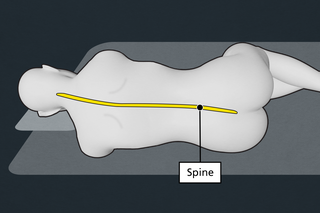
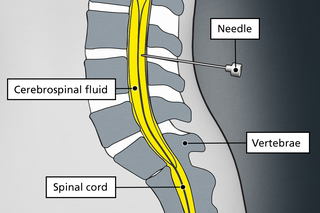
A lumbar puncture involves a needle being inserted into your lower back, between the bones in your spine. It may be done to find out why you're having certain symptoms, to treat a condition, or to give an anaesthetic.
Why a lumbar puncture is done
There are a few different reasons why you might need a lumbar puncture.
A lumbar puncture may be used to:
- find out if symptoms you're having are caused by a brain or spine condition
- treat a condition, such as an infection or some types of cancer
- give you an anaesthetic
You'll usually be referred by a consultant or specialist to have a lumbar puncture. Sometimes it's done if you're very unwell in hospital or need an emergency anaesthetic.
Preparing for a lumbar puncture
The doctor or specialist should tell you if you need to do anything before your lumbar puncture. You can also ask them about any concerns or questions you have.
For example, you may need to stop taking certain medicines for a short time before the lumbar puncture.
You can also ask if you can bring someone to support you during the procedure, but it may not always be possible.
What happens during a lumbar puncture
A lumbar puncture is usually done in hospital. It typically takes around 15 to 20 minutes, but can take longer.
Before a lumbar puncture, you’ll need to get undressed behind a screen and put on a hospital gown.
- You'll be asked to sit down with your head and shoulders bent forwards, or lie down on your side with your knees pulled up to your chest.
- You'll be given a local anaesthetic in your lower back, usually as an injection. This means you'll be awake but will not feel any pain. Children are also usually given medicine (a sedative) to help them relax and stay still.
- A needle is slowly inserted into your lower back, between the bones in your spine (vertebrae). You may feel some pressure and discomfort on your back. You may also have a feeling of pins and needles for a few seconds.
- If you're having tests or certain treatments, fluid from inside your spine (cerebrospinal fluid) is collected in small tubes. This will be sent to a lab for testing. If you're being given medicines or an anaesthetic, these are injected into your spine.
- When the lumbar puncture is finished, the needle is removed. A dressing is put on your back to cover the needle wound and to stop any bleeding.
Important
A lumbar puncture may feel uncomfortable, but it should not be painful. Tell the doctor or specialist if you're in pain.
If you’re worried about needles
Tell the doctor or nurse doing your lumbar puncture if you're worried about needles. They can help you feel more comfortable during the test.
After a lumbar puncture
You’ll need to stay at the hospital for around 1 to 2 hours to be monitored. You'll need to lie flat on your back and rest.
If you’re having a lumbar puncture as an outpatient, you should be able to go home after a few hours.
Recovering from a lumbar puncture
It can take a few days to recover from a lumbar puncture, and for some people it can take longer. There are some things you can do that can help.
Do
-
rest for at least 24 hours after having a lumbar puncture
-
drink plenty of fluids
-
try lying flat on your back if you have a headache
-
take paracetamol to ease a headache or any pain
Don’t
-
do not do physical work, heavy lifting, or play sports until you feel well enough
Side effects of a lumbar puncture
After having a lumbar puncture you may have some side effects including:
- a headache
- back pain
- bleeding or clear fluid leaking from where the needle went into your back
- swelling where the needle went into your back
These side effects are common and should go away after a few days.
Possible complications of a lumbar puncture
A lumbar puncture is usually very safe.
Complications are extremely rare, but can include:
- long-term back pain
- infection
- nerve damage, which can cause long-term pain, pins and needles, or loss of feeling in your arms or legs
- hearing loss
- double vision
- blood clots
Sometimes it's difficult to do a lumbar puncture. If this happens, you may need to go back for a second appointment.
Urgent advice: Ask for an urgent GP appointment or contact NHS 111 if:
You've had a lumbar puncture and:
- you have severe pain
- you have a headache that does not go away
- you have a high temperature
- you're sweating more than usual
- your wound is bleeding or leaking clear fluid for more than 1 week
You can also call 111 or get help from NHS 111 online.
Immediate action required: Call 999 if:
- your arms or legs feel weak or numb
- you're having problems peeing or pooing
- you're feeling confused
Getting your lumbar puncture results
If you had a lumbar puncture to find out why you're having certain symptoms, you may get your results in a few days. Sometimes it can take a few weeks.
You may need a follow-up appointment to talk about your results.
If you don't hear anything after a few weeks, contact the specialist or GP surgery.
Your specialist, GP or nurse should talk to you about your results and explain what happens next.
Sometimes you may need other tests, depending on why you had the lumbar puncture.
Ask to talk to a healthcare professional if you have questions about your results, or do not understand them.
Page last reviewed: 14 November 2023
Next review due: 14 November 2026