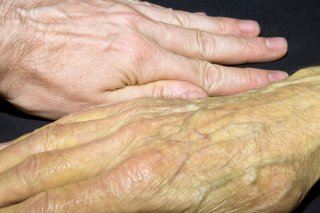
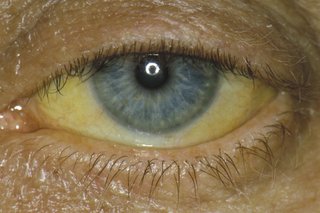
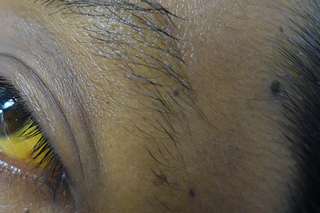
Jaundice is a term used to describe the yellowing of the skin and the whites of the eyes.
It's caused by a build-up of a substance called bilirubin in the blood and tissues of the body.
Bilirubin is a waste product that's produced during the normal breakdown of red blood cells. The liver combines bilirubin with bile and it's released into the digestive system and passed out of the body in urine or stools. It is bilirubin that gives urine its light yellow colour and stools their dark brown colour.
Jaundice can occur as a result of any condition or disorder that disrupts the functions of the liver, such as sickle cell anaemia, Gilbert’s syndrome or cirrhosis.
It's very common for newborn babies to be born with the symptoms of jaundice. Newborn jaundice tends not to be a cause for concern. It usually resolves within two weeks without treatment.
See Newborn jaundice for more information.
Jaundice symptoms
The most common symptoms of jaundice are:
- yellowing of the skin, eyes and mucus membrane (the cell lining of the body’s passageways and cavities, such as the mouth and nose)
- pale coloured stools (faeces)
- dark coloured urine
Read more about the symptoms of jaundice.
When to see your GP
Always seek immediate medical advice if you develop the symptoms of jaundice. The symptoms of jaundice are an important warning sign that something is wrong with the normal processes of your body.
Types of jaundice
The types of jaundice are classified by the point at which disruption to the normal removal of bilirubin from the body occurs.
The three main types of jaundice are described below.
- Pre-hepatic jaundice – the disruption occurs before the bilirubin has been transported from the blood to the liver. Most cases of pre-hepatic jaundice are the result of conditions that cause the red blood cells to break down too rapidly, such as malaria or sickle cell anaemia (a genetic blood disorder).
- Intra-hepatic jaundice (also known as hepatocellular jaundice) – the disruption occurs inside the liver. Common causes are conditions that affect the liver, such as alcoholic cirrhosis or hepatitis C. People who are obese can also develop cirrhosis as a result of a build-up of fat inside their liver. This type of liver damage is known as non-alcoholic fatty liver disease.
- Post-hepatic jaundice (also known as obstructive jaundice) – the disruption prevents the bile (and the bilirubin inside it) from draining out of the gallbladder and into the digestive system. A common cause of post-hepatic jaundice is gallstones, which create a blockage in the bile duct system.
Read more about the causes of jaundice.
Who's at risk
Due to the associated risk factors, intra-hepatic and post-hepatic jaundice are more common in middle-aged and elderly people than in the young. Pre-hepatic jaundice can affect people of all ages, including children.
Treating Jaundice
Treatment for jaundice in adults and older children depends on the underlying condition that's causing it.
After having different tests to determine the cause of jaundice, the appropriate treatment will be recommended.
Read more about diagnosing jaundice.