Hand, foot and mouth disease is a common childhood illness that can also affect adults. It usually gets better on its own in 7 to 10 days.
Check if it's hand, foot and mouth disease
The 1st signs of hand, foot and mouth disease can be:
- a sore throat
- a high temperature
- not wanting to eat
The 2nd stage usually starts a few days later and can include:
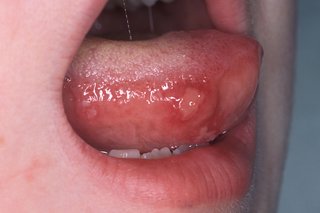
- mouth ulcers, which can be painful
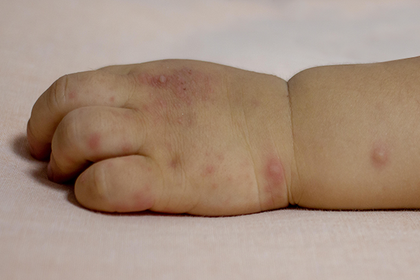
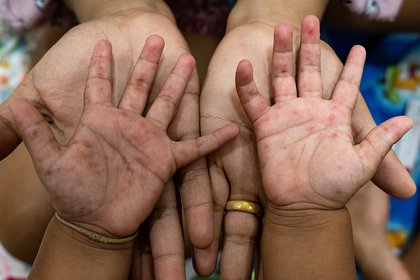
- a raised rash of spots on the hands and feet, and sometimes the thighs and bottom
The rash of spots can look pink, red, or darker than the surrounding skin, depending on your skin tone.
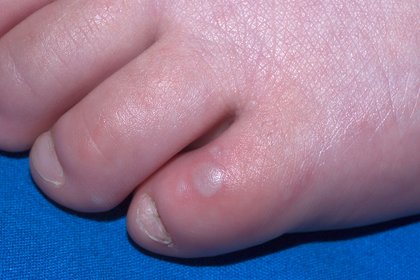
The spots can turn into blisters, which might be grey or lighter than surrounding skin and can be painful.
The symptoms are usually the same in adults and children, but can be worse in babies and children under 5.
Mouth ulcers
Spots on the hands and feet
- 1: Hand, foot and mouth disease spots on white skin (thumbnail).
- 2: Hand, foot and mouth disease spots and patches on medium brown skin (thumbnail).
- 3: Hand, foot and mouth disease blister on white skin (thumbnail).
Long description, image 1.
Hand, foot and mouth disease spots on the wrist and hand of a baby with white skin.
There are 3 round, raised spots and several smaller, flat spots.
The large spots vary in size from around 2mm to 5mm. 1 spot is near the knuckle of the index finger, the other 2 are near the wrist. The skin around each spot is pink. The centre of each large spot is light pink or similar to the baby's skin tone. The spots look like they have fluid in them.
There are patches of pink skin on the fingers and back of the hand.
Long description, image 2.
Hand, foot and mouth disease spots on the palms of a child with medium brown skin.
The child's palms and fingers have many pink spots and patches on them. Most spots are round, but some are an uneven shape. The centre of some spots is light pink or the same colour as the person's skin. Other spots are dark pink or red without a lighter centre.
Some spots on the joints of the fingers look like red scratches.
Long description, image 3.
Hand, foot and mouth disease blisters on the little toe of a child with white skin. The skin on the top of the toe is pink. There's a large raised, round, light grey blister on the centre of the toe.
Next to the large blister are two very small white blisters.
If you're not sure your child has hand, foot and mouth disease
Look at other childhood rashes.
Hand, foot and mouth disease has nothing to do with foot and mouth disease that affects farm animals.
How to treat hand, foot and mouth disease yourself
You cannot take antibiotics or medicines to cure hand, foot and mouth disease. It usually gets better on its own in 7 to 10 days.
To help the symptoms:
- drink fluids to prevent dehydration and avoid acidic drinks, such as fruit juice
- eat soft foods like yoghurt and avoid hot and spicy foods
- take paracetamol or ibuprofen to help ease a sore mouth or throat
A pharmacist can help with hand, foot and mouth disease
Ask a pharmacist for advice about treatments, such as mouth ulcer gels, sprays and mouthwashes, to relieve pain.
They can tell you which ones are suitable for children.
Non-urgent advice: See a GP if:
- your symptoms or your child's symptoms do not improve after 7 to 10 days
- you or your child has a very high temperature, or feels hot and shivery
- you're worried about your child's symptoms
- your child is dehydrated (they're not peeing as often as usual)
- you're pregnant and get hand, foot and mouth disease
Hand, foot and mouth disease can be spread to other people.
Check with your GP surgery before going. They may suggest a phone consultation.
How to stop hand, foot and mouth disease spreading
Hand, foot and mouth disease is easily passed on to other people. It's spread in coughs, sneezes, poo and the fluid in the blisters. You can get it more than once.
You can start spreading it from a few days before you have any symptoms, but you're most likely to spread it to others in the first 5 days after symptoms start.
To reduce the risk of spreading hand, foot and mouth disease:
- wash your hands often with soap and water, and children's hands too
- use tissues to trap germs when you cough or sneeze
- bin used tissues as quickly as possible
- do not share towels or household items like cups or cutlery
- wash soiled bedding and clothing on a hot wash
Staying off school or nursery
Keep your child off school or nursery while they're feeling unwell.
But as soon as they're feeling better, they can go back to school or nursery. There's no need to wait until all the blisters have healed.
Keeping your child away from other children for longer is unlikely to stop the illness spreading.
Hand, foot and mouth disease in pregnancy
Although there's usually no risk to the pregnancy or baby, it's best to avoid close contact with anyone who has hand, foot and mouth disease.
This is because:
- having a high temperature during the first 3 months of pregnancy can lead to miscarriage, although this is very rare
- getting hand, foot and mouth disease shortly before giving birth can mean your baby is born with a mild version of it
Speak to a GP or your midwife if you have been in contact with someone with hand, foot and mouth disease.
Page last reviewed: 12 February 2021
Next review due: 12 February 2024