A GP can help you get hearing aids if you think you need them.
The earlier you get them, the more you'll get out of them – so do not wait until your hearing gets really bad before seeing a GP.
Benefits of hearing aids
Hearing aids will not make your hearing perfect, but they make sounds louder and clearer, reducing the impact hearing loss has on your life.
Hearing aids can:
- help you hear everyday sounds such as the doorbell and phone
- improve your ability to hear speech
- make you feel more confident when talking to people and make it easier for you to follow conversations in different environments
- help you to enjoy listening to music and the TV, at a volume that's comfortable for those around you
But hearing aids only help if you still have some hearing left, so do not put off getting help if your hearing is getting worse.
How to get hearing aids
See a GP if you're having problems with your hearing. They may refer you to a hearing specialist for an assessment if they think you might need a hearing aid.
If your specialist recommends hearing aids, talk to them about the different types available and which is best for you. You may be able to try a few types before choosing.
Some types may be available to use straight away. Others may need to be custom made after your ear has been measured or a cast of your ear has been taken. These will usually be ready in a few weeks.
When your hearing aid is ready, it will be programmed to suit your level of hearing loss. You'll be shown how to use it and how to look after it.
Another appointment will be arranged for a few weeks later to check how things are going.
Types of hearing aids
A variety of hearing aids are available.
Behind the ear (BTE) hearing aids
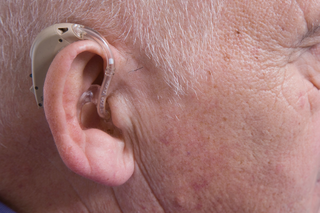
Behind the ear (BTE) hearing aids are the most common type.
They're made up of a small plastic device that sits behind your ear.
This is attached with a tube to a piece of plastic that fits in your ear (an earmould) or a soft tip that goes into the opening of your ear (an open fitting).
BTE hearing aids are one of the easiest types to use and are suitable for most people with hearing loss. They're available in a range of colours.
Hearing aids on the NHS
Hearing aids are available on the NHS.
Your GP can refer you to an NHS hearing aid provider if they think you might need a hearing aid.
The benefits of getting a hearing aid on the NHS include:
- hearing aids are provided for free as a long-term loan
- batteries and repairs are free (there may be a charge if you lose or break your hearing aid and it needs to be replaced)
- you do not have to pay for any follow-up appointments or aftercare
But while several modern hearing aids are available on the NHS, these are usually the behind the ear (BTE) or, very occasionally, the receiver in the ear (RITE) type. You may need to pay for private treatment if you want one of the other types.
The waiting time for getting a hearing aid on the NHS can sometimes be longer than the wait for private treatment.
Paying for hearing aids
If you do not mind paying for treatment, you can choose to go to a private hearing aid provider directly.
This may mean you can pick from a wider range of hearing aids, including the smaller, less visible models.
Not all hearing aids are suitable for everyone, but the hearing specialist (audiologist) will tell you which hearing aids are suitable within your budget.
If you choose to pay for private treatment:
- make sure you research typical costs of hearing aids and any aftercare – you can pay anything from £500 to £3,500 or more for a single hearing aid
- shop around to see what types of hearing aid are available from different providers
- consider the cost of batteries and if you can change them easily
Batteries, repairs and replacements
If you have an NHS hearing aid, you can get free batteries and repairs from the NHS hearing aid service who fitted your hearing aids.
Ask your audiologist about how to obtain batteries and request servicing and repairs.
You may need to come in for an appointment, or you may be able to send off for batteries or a repair in the post.
Your local hearing aid service can also replace hearing aids that have been lost or damaged, although there may be a charge for this.
If you have a private hearing aid, contact your hearing aid provider if you need it repaired or replaced.
You may have to pay for this service if it's not already included in your payment plan.
Help and support if you wear hearing aids
Adjusting to hearing aids can be difficult at first. It may take a few weeks or months to get used to them.
You'll have follow-up appointments after they're fitted to check how things are going, but get in touch with your audiologist at any point if you're having problems.
Several hearing loss organisations can also provide help and support if you're adapting to hearing loss or life with a hearing aid.
Royal National Institute for Deaf People (RNID) has information about local support services
Other organisations that can provide information and advice include:
Hearing implants
For some people, hearing aids do not help and instead they need to have a special device fitted inside or to their skull during an operation. These are known as hearing implants.
Common types of implant include bone anchored hearing aids, cochlear implants, auditory brainstem implants and middle ear implants.
Bone anchored hearing aids
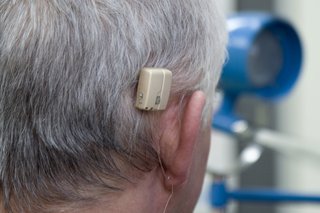
A bone anchored hearing aid (BAHA) may be an option if you have hearing loss caused by sound being unable to reach your inner ear.
This type of hearing aid is attached to your skull during a minor operation. It picks up sound and sends it to the inner ear by vibrating the bones near your ear.
It can be clipped on and off – for example, it's removed at night and when you swim or take a shower. Some newer types are held onto the head with magnets instead of a connector through the skin.
Cochlear implants
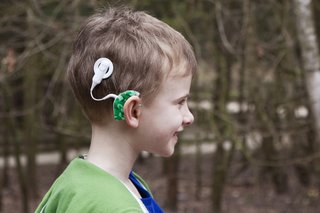
A cochlear implant may be an option if you have severe, permanent hearing loss that is not helped by hearing aids.
They work by turning sound into electrical signals and sending them to part of the inner ear called the cochlea. From here, the signals travel to the brain and are heard as sound.
The implant has 2 main parts:
- a microphone behind the ear that picks up sound and changes it into electrical signals, which are sent along a wire to a device on the skin
- a device placed inside the skull that picks up the electrical signals from the device on the skin and sends them along wires to the cochlea
Before having a cochlear implant, you'll have an assessment to find out if it will help. The implant will only work if the nerve that sends sound to the brain (auditory nerve) is working properly.
Auditory brainstem implants
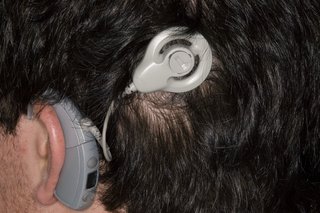
An auditory brainstem implant (ABI) may be an option if you have severe, permanent hearing loss and a problem with your auditory nerve.
An ABI works in a similar way to a cochlear implant, but the electrical sound signals are sent directly to the brain along wires, instead of the cochlea.
An ABI will not usually fully restore your hearing, but it can improve it to some degree.
Hearing Link Services has more information about auditory brainstem implants
Assistive listening devices (ALDs)
There are many sorts of listening devices, other than hearing aids, to help boost your hearing in everyday situations in the home and out and about.
Assistive listening devices (ALDs), which can be used with a hearing aid or on their own, include:
- personal hearing loops, like neckloops, that allow you to hear music or phone calls directly through your hearing aid
- personal communicators (or conversation listeners): portable devices to help you hear over a long distance or in noisy places
- TV amplifiers: devices that allow you to hear sound clearly through your hearing aid without needing to turn up the volume
- smoke alarms appropriate for your level of hearing, such as vibrating devices
Your GP or hearing specialist will tell you about organisations that provide advice on obtaining ALDs, such as:
Page last reviewed: 18 October 2023
Next review due: 18 October 2026