Living with sickle cell anaemia

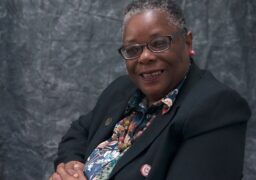
Pamela Gyebi-Ababio, from Croydon, is passionate about raising awareness of sickle cell disorder and how it affects people. She gave this interview in 2008, when she was 18.

“I’ve had sickle cell anaemia since I was born, but my earliest memory of it was when the head teacher in primary school picked on me because I wore socks over my tights to keep my ankles warm,” says Pamela. Keeping warm can help prevent a sickle cell crisis, or bout of pain.

“One of the reasons I want to raise awareness is so that people can understand how the disease affects others, and how they can be sensitive towards sicklers, especially in schools.”

Talking about sickle cell

Pamela got involved in publicising sickle cell disorder after letting her consultant and her sickle cell advisor know that she wanted to raise awareness. She has since given interviews in the national media, talking honestly and openly about her life with sickle cell. 

“I want people living with sickle cell to have more confidence in themselves and to realise they aren’t the only ones, and that we can still achieve,” she says. “It gets a bit stifling working hard for something, like exams, and not being able to do well due to bad health.”

Sickle cell disorder (SCD) is a group of inherited blood disorders that evolved thousands of years ago in areas of the world where malaria occurs. The most common is sickle cell anaemia. Most people affected by sickle cell anaemia are of African or Caribbean origin.

SCD affects the blood’s ability to carry oxygen around the body. A protein called haemoglobin doesn’t work properly, and turns red blood cells into sickle (crescent) shapes. These can get stuck in blood vessels and block the flow of blood, causing terrible pain, known as a sickle cell crisis.

People with sickle cell anaemia can also feel very tired. Resting, drinking water and keeping warm can help stop a crisis coming on.

How a crisis affects your life

“Crises come on in different ways,” says Pamela. “Sometimes I feel pain in my arm, deep in the tissue. Sometimes the pain is in my leg or waist, which is worse. It feels a bit like electric shocks. I take painkillers and drink lots of water to try to stop it coming on. There are times when it’s too painful to move, and I just have to rest in bed.”

Her most serious crisis happened when she was 16. Severe pain in her shinbones meant Pamela couldn’t bear any weight on her legs, and she was taken to hospital in an ambulance on Christmas Eve. “They gave me morphine and I was allowed home after five days,” she says.

Pamela had to take months off school, and was unable to walk without a stick or someone to lean on.

She says her biggest difficulty has been the effect on her education. “My GCSE predictions were A stars, As and Bs, but I got eight Bs,” she says. “I missed some work deadlines as I was in hospital. If I could just have at least 80% attendance, I know I would achieve the grades my brain is capable of.”

Pamela repeated the year and is now studying for A levels in maths, biology and chemistry. She hopes to become a doctor.

Family history

Pamela’s family is supportive of her work to publicise sickle cell anaemia. Her parents, originally from Ghana, both have sickle cell trait. This means they have no symptoms but they have the gene associated with the disorder, and can pass it on if they have a baby. They weren't aware of this until they had Pamela. Their three younger daughters don’t have SCD.

There's now a screening programme to detect sickle cell trait in pregnant women and sickle cell disorder in newborn babies. Men and women can get screened before starting a family.

Since April 2007, Pamela has had blood transfusions every month to help stop her body producing sickle cells. As a result of the transfusions, she is also having treatment to prevent the build-up of iron in her blood, something that people with sickle cell cannot cope with.

“Sometimes I feel sickle cell spoils my dreams, but I have to stay positive and think of other ways of doing what I want,” says Pamela. “I want to get people talking about sickle cell disease, so there’s less stigma." 

Sickle cell anaemia: Pamela's story

Pamela, 18, was born with sickle cell anaemia, a genetic blood disorder. She describes how to cope with the disease on a daily basis, and explains why it is important to raise awareness of the condition.

Last reviewed: 11/09/2012

Next review due: 11/09/2014

Ratings

How helpful is this page?

Average rating

Based on 3 ratings

All ratings

Add your rating

Comments are personal views. Any information they give has not been checked and may not be accurate.

pamfluff said on 08 October 2009

Thank you for all your comments, they are of real encouragement. God Bless and thank you aduamargaret, are u Mrs. S?

Report this content as offensive or unsuitable

aduamargaret said on 22 June 2009

I was your teacher years ago and remember your pain. I'm so glad to see you so well. I'm very proud of you! The very same face as I see in my photo of you smiled out at me in your video!

Report this content as offensive or unsuitable

User59671 said on 04 November 2008

Pamela, i truly admire your motivation and drive. you are a real inspiration to everyone. i agree with you, there should be a much greater awareness of sickle cell anaemia, i have been researching sickle cell anaemia as it is part of my a level biology syllabus and was surprised over how few people are aware of sickle cell anaemia. I wish you all the best in the future , you are bound to achieve your goal in medicine as you are dedicated and won't let anything get in your way

Report this content as offensive or unsuitable

steph_oge said on 26 October 2008

Pamela I probably am not the first to say this but here it goes: you are divine. U are a source of inspiration to me, I mean this in the most humble manner. I am in pursue of Medicine,a passion i cannot deny but one that sometimes i find myself taking it for granted.
I have read ur other article and with this one, i am moved. I mean, i don't suffer 4rm any infirmities, or even know someone who suffers from one,wat i mean is i dnt have a constant drive...dnt get me wrong, i shud be capable of being consistently HOT for medicine, nt lukewarm or cold. and ur illness is not a LABEL or A CONSISTENT TRIGGER to helping U stay strong and true to Med.
U have a committed heart, a thoughtful and helpful spirit.I guess what im dealin with is a sense of guilt, and that shouldnt be the case.
i just want to say, all the best, gud luck and God will be ur's and ur family's strength.....xxo thanks

Report this content as offensive or unsuitable

Services near you

Find addresses, phone numbers and websites for services near you

Tools

Black health

Conditions that are more common among African and African Caribbean people, and how to reduce your risk

Health and fitness

Boost your health and fitness with fun and practical ideas to help you get into shape

Student health

Advice for students on sex, alcohol, drugs and how to eat a healthy diet on a budget