Media centre

Children walking to school benefit from more valuable social time

Research published today by charity Living Streets to mark the start of Walk To School Week, shows that parents who walk their children to school instead of driving are spending more valuable social time with their family and peers whilst being physically active.

Over two thirds of parents who drive their children to school say that they don’t socialise with any other children until they arrive at school. Children who are driven are also far more likely to shun socialising en route with their parents or siblings, instead opting to participate in lone activities such as listening to their MP3 players, playing on inactive video games or reading during the journey. As a result, 44% of parents of children who are driven to school admit that they spend 5 minutes or less engaging in quality conversation with their child on the journey to and from school.

Around half of primary school children currently don’t walk to school regularly, with an enormous 41% being driven to school in cars despite the fact that the average distance to primary schools remains at just over 1 mile an easily walk-able 20 minutes.

Aside from the health and social benefits of walking to school, research shows that avoiding the daily school run is an excellent money saving option. New data by Change4Life calculates that the average cost of the school run by car per primary school child is £367*, which equates to £612 million for transporting all primary school children to school per year. In the current economic climate, this could be money saved or better spent on other fun family activities and treats.

Living Streets research also showed:

  • 90% of parents who walk their children to school recognise that the journey is an important time for them to socialise with their children
  • Over a third of those that walk their kids to school state that the journey to school is where they find out the most about their child’s life
  • Walking is more sociable for parents too - only 39% of parents who drive their children to school speak to other adults at the school gates compared to 69% of those who walk their children to school.

This week is National Walk to School Week and well over a million pupils will be getting involved and will be encouraged to ‘Walk ‘n’ Talk’ on their way to school to benefit from the social and health aspects that walking together has for individuals, families and communities, away from the stresses of the traffic jam and the blaring of the radio.

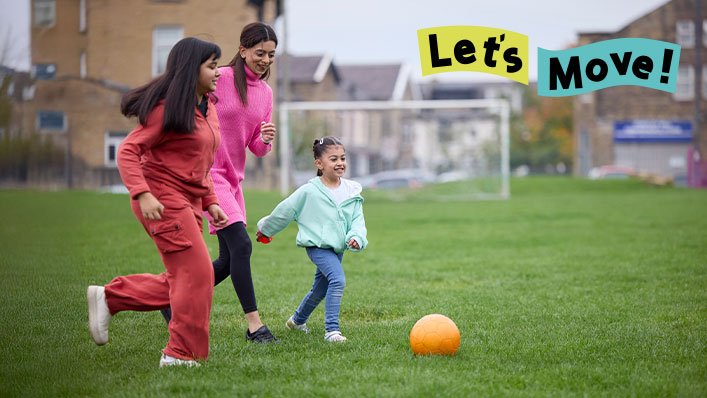
Change4Life is supporting the initiative which coincides with its Walk4Life month-long campaign aimed at getting children up and about and helping them achieve their recommended 60 Active Minutes a day.

Child Psychologist, Professor Tanya Byron comments:

"Walk4Life is a campaign that encourages us all to invest in the wellbeing of ourselves and our children. Starting the day with a walk to school not only saves money, but also brings time for conversation and interaction in a way that is fun and positive for everyone. It is also a great way to boost your child’s levels of concentration and ability to focus once at school. Family time together is priceless - often the simplest things in life can make the biggest difference.”

Tony Armstrong, Chief Executive of Living Streets said:

“Not only is walking to school an excellent way to get people out and about on foot, it is also a great time for children to spend some real quality time with their parents or carers, socialising with friends and burning off their excess energy before getting their head in the books.

“We are delighted that Walk to School Week is part of the Change4life movement from the Department of Health and challenge everyone to give walking a go during Walk to School Week. We think you’ll be amazed at how enjoyable a regular walk can be. It’s one of the cheapest, greenest, most enjoyable ways you can spend regular quality time together, and reap health rewards for all the family!

For enquiries about Change4Life, contact Lottie.parsons@freud.com or Efe.abebe-heywood@freud.com tel:020 3003 6437 / 07970 630061.

For case studies from local schools or families via the National Healthy Schools Programme (NHSP), contact Emily.pendleton@freud.com tel: 020 3003 6553

Notes to Editors

*2008 Centre for Economics and Business Research (cebr), based on ONS, DfT, and AA figures.

Living Streets’ Walk to School campaign is supported by the Department for Transport, Transport for London, ACTravelwise and Modeshift, and delivered in partnership with local organisers throughout England.

The Walk to School campaign encourages primary school pupils, parents and staff to incorporate regular physical activity into their daily lives by walking to and from school wherever possible. Visit www.walktoschool.org.uk for more information.

Walk4Life is part of the Change4Life movement. In order to maintain a healthy weight we need to both eat well and move more. Many families are making changes that will help them live healthier and longer. Visit www.nhs.uk/change4life or call 0300 1234567 for more information.

The National Healthy Schools Programme (NHSP) is an exciting long-term initiative from the Department of Health (DH) and Department for Children, Schools and Families (DCSF), which is equipping children and young people with the knowledge and skills they need to make improved life choices and to be more healthy. It is a successful non-statutory national programme: currently 98% of schools (21506 schools) are participating nationally and 75% (16396 schools) have National Healthy School Status.