Diet and exercise during pregnancy
Having a healthy lifestyle is important at any time, but particularly if you are having a baby. Eating healthily during pregnancy will help your baby develop and grow - and keeping active will make you feel better and give you more stamina for the birth.
What changes can I make when I'm pregnant?
You don’t need to make huge changes, you just need to make sure that you eat a variety of wholesome foods every day in order to get the right balance of nutrients you and your baby need. You should also avoid certain foods to be on the safe side, and take moderate activity on a regular basis.
Some diet and exercise tips if you're pregnant
- There’s no need to 'eat for two' when you're pregnant. It’s the quality not the quantity that’s important. With a few exceptions you can continue to eat all the foods you enjoy.
- Eating healthily often means just changing the amounts of different foods that you eat rather than cutting out all your favourites.
- The more active you are during pregnancy, the easier it will be for you to adapt to your changing shape. It will also help you to cope with labour and get back into shape after the birth.
- If you feel tense after a hard day’s work, physical activity is an excellent way of relaxing and it will help you to sleep soundly.
- Keep up your normal daily physical activity or exercise for as long as you feel comfortable. Activities such as brisk walking, swimming, and gentle toning and stretching classes are ideal during pregnancy.
- If you didn’t do much exercise before you were pregnant, don’t suddenly take up strenuous exercise. Remember, you should still be able to hold a conversation when exercising at the right level but your heart should be beating faster than normal, you should be breathing more deeply and feeling slightly warmer.
- Try to keep active on a daily basis. Building in half an hour of activities like brisk walking or swimming can be of real benefit to your health and well-being. If you can’t manage that, any amount is better than nothing.
- It is important for your baby’s development that you don’t overheat. Avoid strenuous exercise and be careful exercising in hot weather.
- Avoid contact sports (where there is a risk of being hit in the stomach) or any high impact exercise that puts strain on your joints or ligaments.
- Drink plenty of fluids.
- If you go to exercise classes, make sure your teacher is properly qualified, and knows that you’re pregnant and how far your pregnancy has progressed.
- You might like to try swimming because the water will support your increased weight. Some local swimming pools provide aquanatal classes with qualified instructors.
Back to top
Breastfeeding and weaning
Breastfeeding helps give your baby all the nutrients he or she needs for the first six months of life, and can continue to benefit your baby along with solid foods for many months. Breastfeeding can help to protect your child from infection and other disease. And, it can help to reduce your chance of getting some illnesses later in life.
Until six months, your baby needs only breastmilk or infant formula milk. Around six months your baby will need more than just milk alone and will be able to eat solid foods in addition to breast or formula milk.
Weaning means introducing a range of foods gradually until your baby is eating the same foods as the rest of your family. Your baby’s development from breast or formula milk feeding to sharing in the family meal is one of the first stages of growing up. Let it happen at its own pace, and if you have any worries talk to your health visitor.
For more helpful information on diet and exercise during pregnancy, breastfeeding and weaning, download 'Getting off to the best start' (PDF, 3.10 MB) You can also order a hard copy from www.orderline.dh.gov.uk, quoting reference 278957.
There may be times when you’ll need more practical help with breastfeeding. You could speak to your midwife, health visitor or trained volunteer. You could also see if there’s a local breastfeeding group so you can meet other mums in the same situation, or call the National Breastfeeding Helpline on 0300 100 0212* (lines are open 9.30 am to 9.30 pm) where help is at hand and you can speak to a trained breastfeeding support volunteer in your local area.
Also, remember to ask your midwife or health visitor for your free copy of the breastfeeding DVD 'From Bump to Breastfeeding', which follows real mothers’ stories.
* For breastfeeding support in Bengali & Sylhetti, telephone 0300 456 2421.
Calls to 0300 numbers cost no more than calls to UK numbers starting 01 and 02 and will be part of any inclusive minutes that apply to your provider and call package.
Back to top
Getting active after the birth
When you feel able after the birth and your health visitor says it is OK, slowly start to build some gentle physical activity into your day. Begin slowly at a pace that feels good to you and work up gradually to a moderate level.
Making physical activity part of your daily routine will make you and your baby happier and healthier. Benefits associated with a habit of physical activity for you and your kids include:
- You will have more energy to deal with your daily tasks
- Your muscles will be stronger, making it easier to carry your baby
- You will be toning muscles that were stretched during labour and delivery
- It’s a great way to relieve stress and tension and give you time to yourself
- It will help you return to your pre-pregnancy shape when combined with a balanced, healthy diet
Remember to wait at least 4 to 6 weeks after you have your baby to begin doing higher levels of physical activity and always check with your health visitor. Doing physical activity that is too hard, too soon after delivery, can slow your healing process. If in doubt, always check with your health visitor.
Listen to your body. It is important to take it easy or stop if you experience discomfort and pain. Again, speak to your health visitor if you have any worries.
Being active, particularly outdoors, is a great way to take a break with your baby and can help you get back into shape. A little regular exercise will make you feel better physically and mentally – a brisk walk with a stroller can help you feel more relaxed and healthy.
Taking up an activity can be a great way of meeting new people or catching up with old friends.
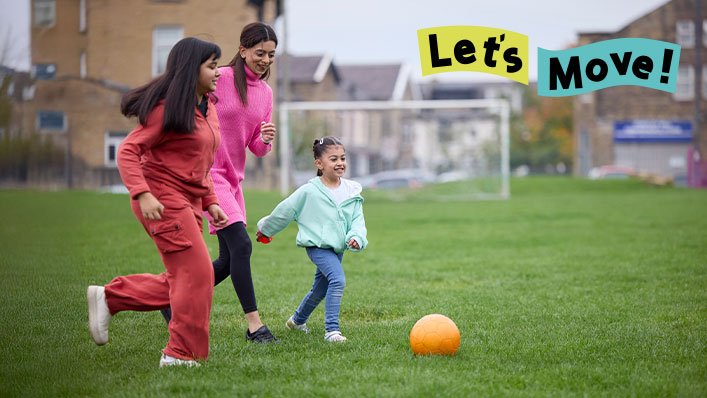
And being an active mum means you will be a healthy role model and more able to share in your kids’ activities as they get older. There’s nothing that kids of all ages love more than running around having fun with their mum or dad!
Back to top